The full case study
Artemis, step by step
On this page · 9 sections
About the business
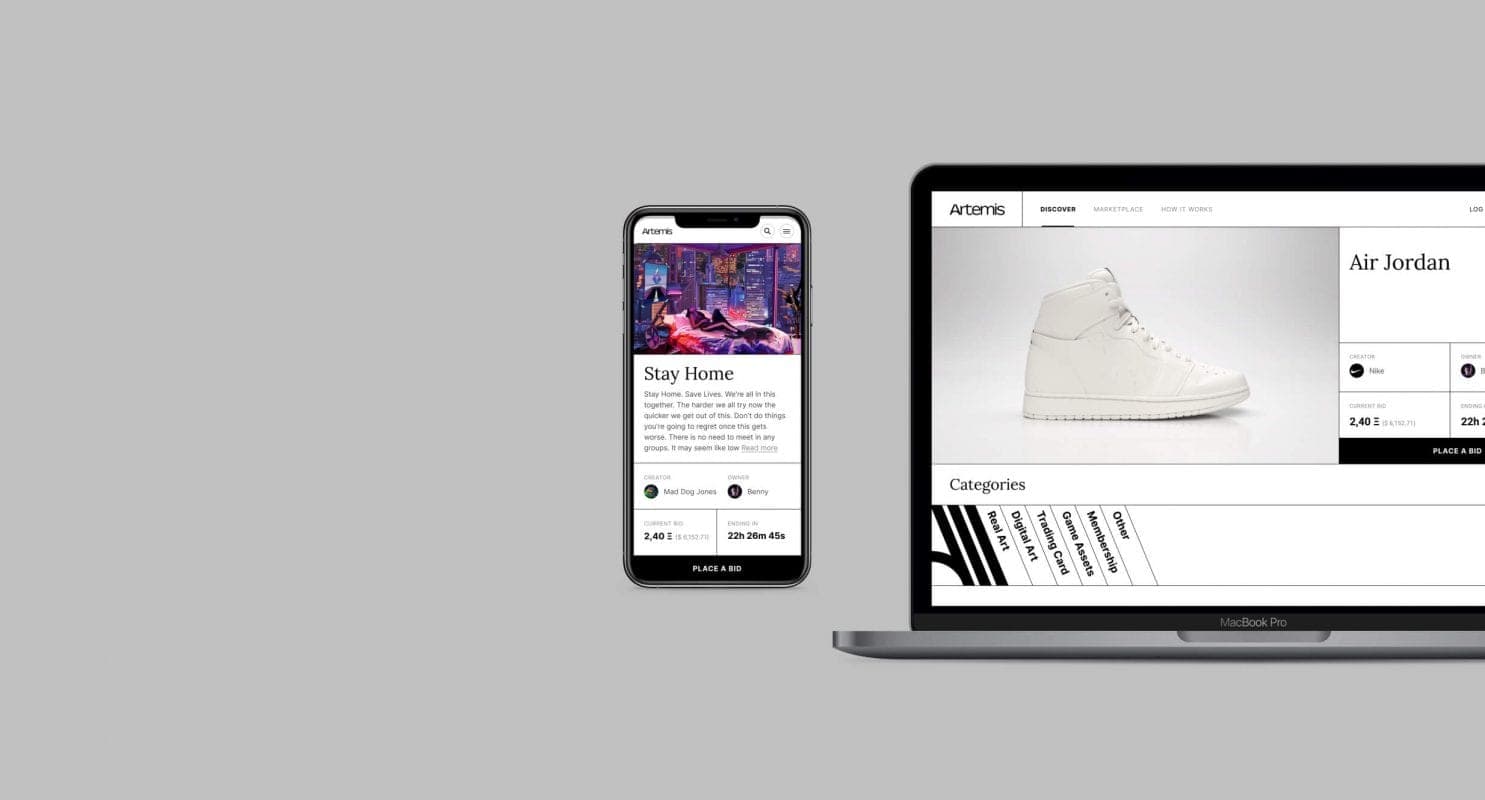
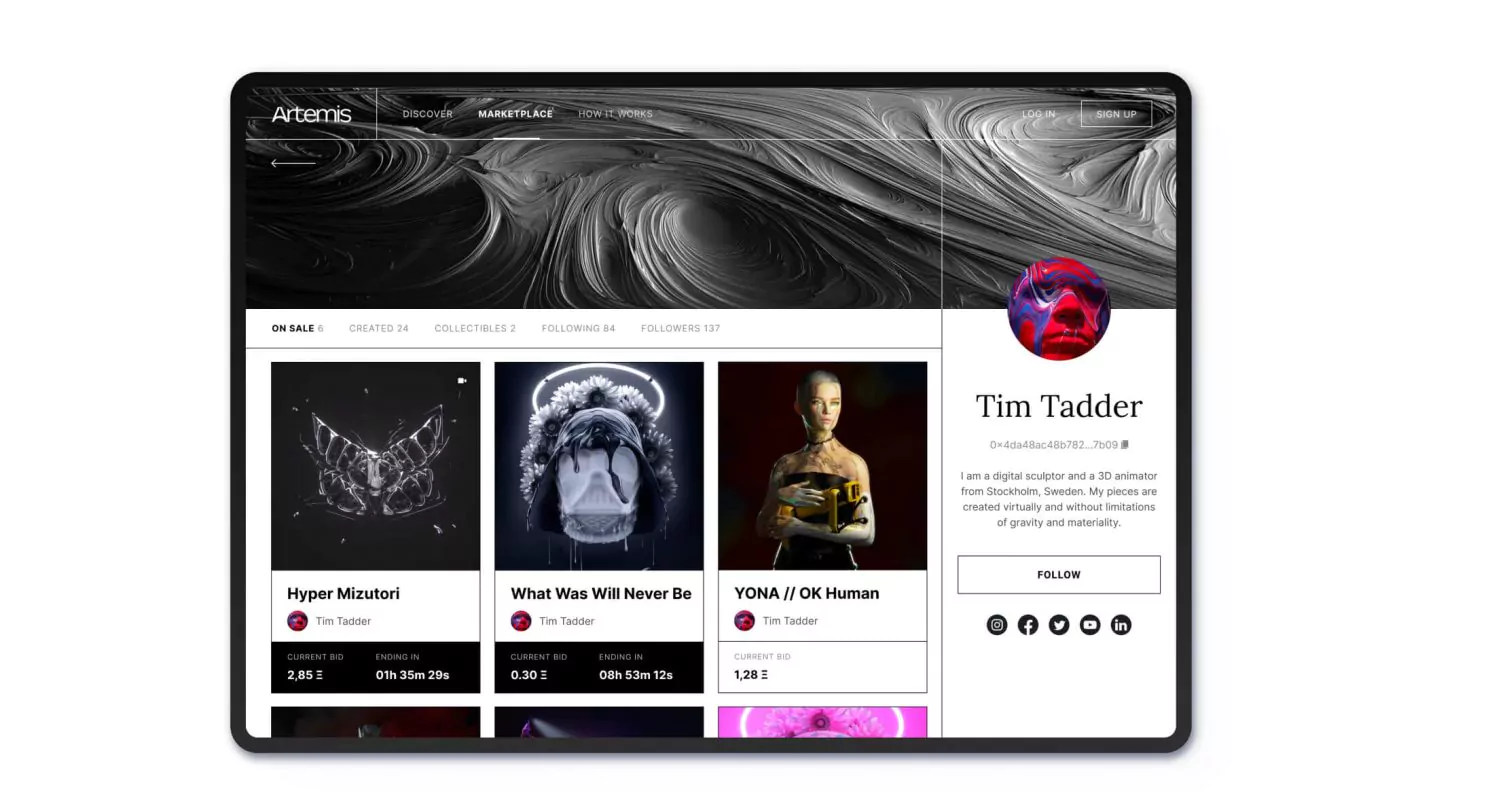
Artemis is an NFT marketplace where creators and digital art owners can put up their assets for sale or bid for digital goods. All transactions are carried out via Ethereum, the second-largest cryptocurrency by market capitalization after Bitcoin.
Project tasks
- Build a solid marketplace for non-fungible tokens and other digital assets that corresponds to industry standards
- Draw up the idea of how to engage potential users and stand out among other NFT marketplaces
- Build a consistent UI system for the platform
Project team
- 2 UI/UX designers
- 2 Front-end engineers
- 2 Back-end engineers
- Blockchain engineer
- Solutions Architect
- DevOps
- QA engineer
- Project manager
- Business analyst
2.5 months for research and design
7 months for development and QA
Research phase & Product discovery
During the Research Phase, we started with clarification of the core requirements, analyzing features of the industry, determining the main market players, and identifying customers’ behavior.
The volume of NFT assets traded globally has increased eightfold in two years. That means not only the vast growth of NFT creators and owners but many competitive marketplaces.
One of our goals was to invent a way of better engaging the audience and thus build a competitive advantage comparing to other NFT marketplaces.
Information architecture
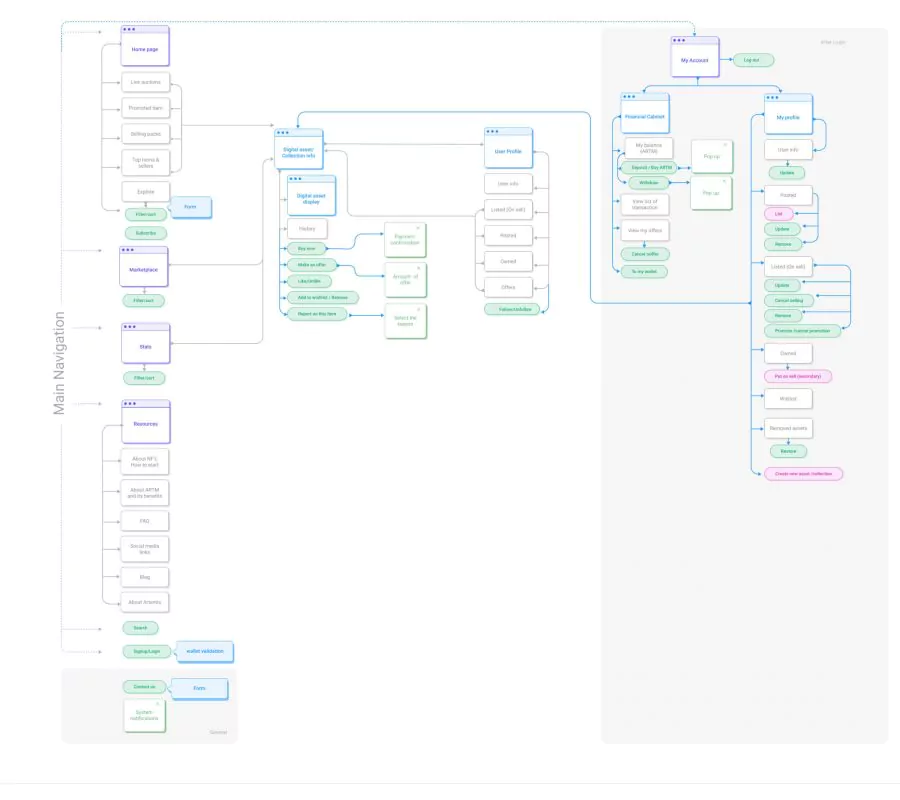
All main actions are now on one screen, with full access to special topics with personalized navigation. Users can review and manage their accounts. As most users use a wide range of features on an everyday basis we needed to consolidate all data on one screen to give users an overview on one page.
Platform features
Product features are the specific functionalities and characteristics that a product offers to users, distinguishing it from others in the market.
Artist’s catalog
All-in-one place containing artworks and statistics
Large art selection
A full variety of items, from digital to real art
Auction
Seamless buying-trading solution
Digital assets verification
Transparent system to follow the story of an artwork
Lottery
A thought out algorithm for adding a surprise factor and engaging users
Direct wallet connection
Best practice of token transfer
Lottery feature
The emotion we wanted our users to experience was curiosity. Besides displaying a list of digital assets one could purchase after the registration, there was a chance to get a limited digital card.
Imagine it as a blockchain lottery. In our version, there were no tricks, like hidden payments whatsoever.
The idea of winning over a limited item encouraged the registration of new users and provided great monthly stats.
Visual appearance
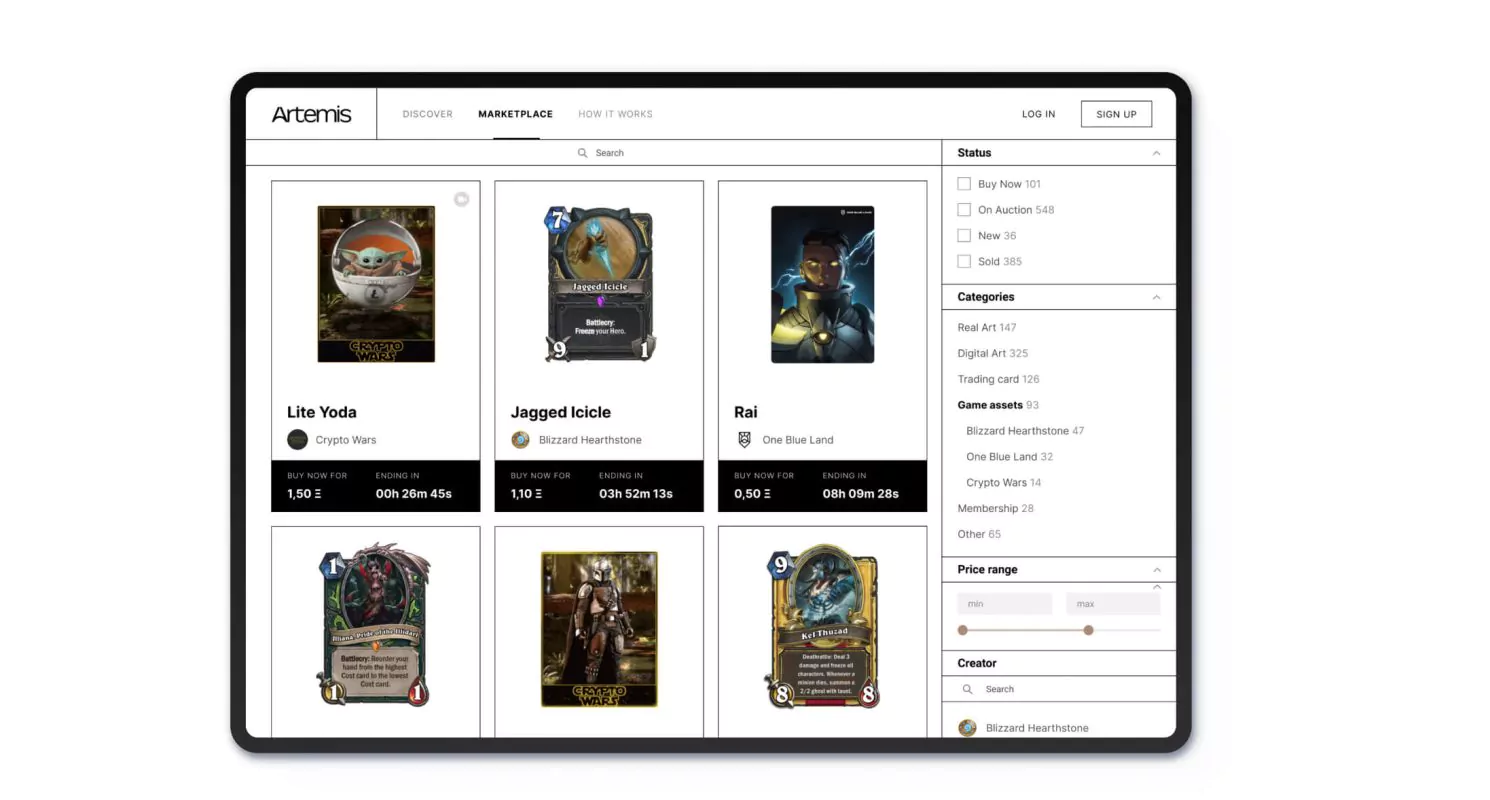
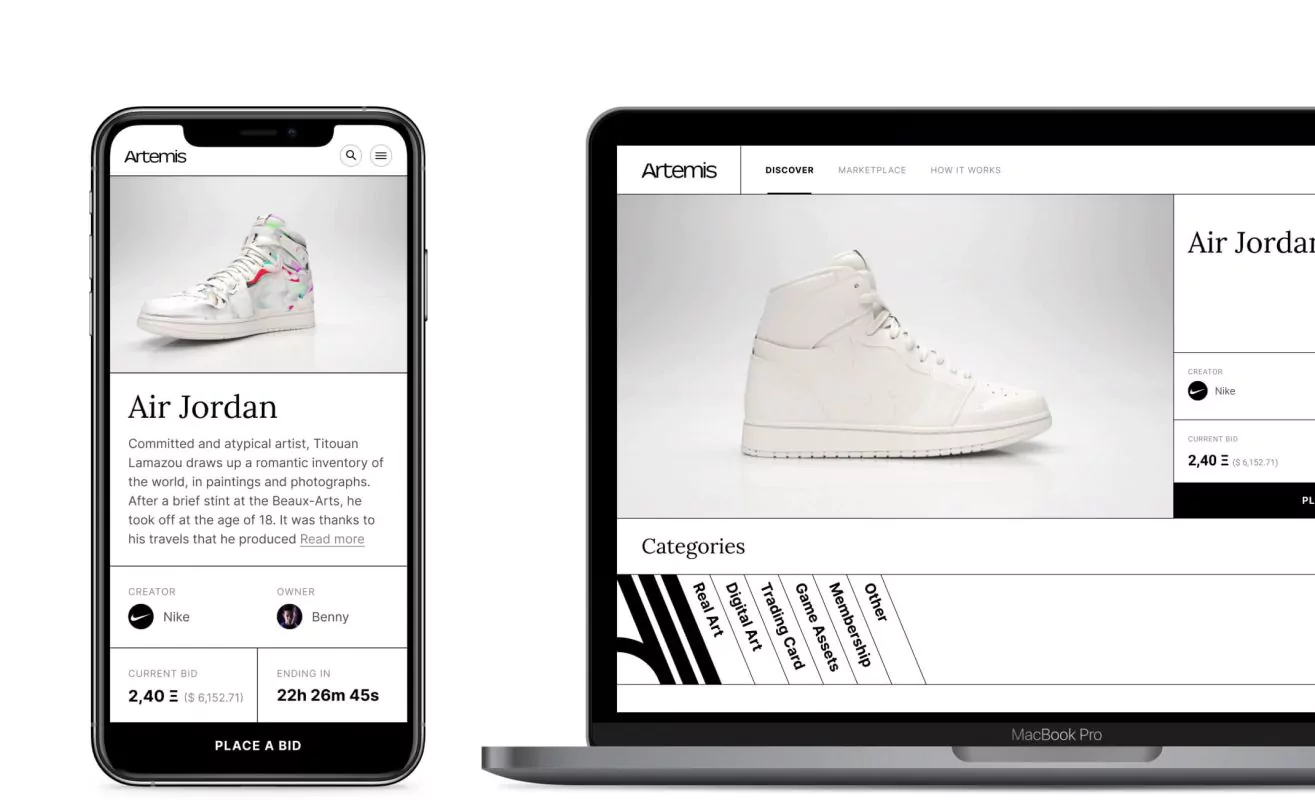
While marketplaces mostly follow the same major features and structure, there’s always room for visual improvements. Our team came up with a clean minimalistic design, as a frame to complement colorful eye-catching digital items.
Outcome
The marketplace attracted not a number of big names of digital creators but also those interested in touching the NFT world. Due to the designed algorithm, random users could try their luck to own a limited marketplace card at no cost. It became a great way to expand the community.
After getting first positive feedback and user growth, our client could attract the attention of significant investors and plan the next round of raising funds and scaling the project.