Service
AI integration services for products and platforms you already run
AI integration services for a product or platform that already has users, data and a release process. As an AI integration company, we work in two ways: we add AI features to your product, or we fix the AI features you have already shipped and people do not use. Either way the work starts with a short first step, and every feature goes live with a plan for when the model is wrong. We added AI to a legacy video surveillance platform, and built AI features into a sales platform and an HR platform for a large energy company.
The situation
The model works in the demo and nowhere near your data
A vendor demo answers every question in the room. Back at the office, the data it needs sits in three systems, the release process has no slot for a model whose answers change, and nobody has decided what a user sees when the answer is wrong.
AI integration is less about picking a model than about where it plugs in: which data it may read, which screen shows its output, who checks it, and how it ships with the rest of the product. Our AI integration solutions start from those four questions.
The other version of the same story comes after launch. The AI feature shipped, but it sits to the side of the product, few people find it, and when its answer is wrong nothing on the screen says so. Nobody can tell whether the cause is the interface or the model, so the fix goes to the wrong team, or to none.
How we work
Two tracks the same path, a different way in
Add AI features to your product
For a product with no AI in it yet, and for an AI demo that was shown to the board and never reached production: the way in differs, the path is the same. First, the AI Opportunity Audit goes through your product and the data it holds and finds the places where a model would change what a user gets. Second, the findings are prioritized, with the reasoning and what happens when the model is wrong. Third, the strongest hypothesis comes back as a clickable prototype in your own screens, with an estimate. Fourth, what survives goes to production: answer quality on real queries, integrations with the systems it reads from, access, cost control and monitoring. The build runs on the Artkai AI SDLC: agents do the work inside each stage, and one accountable person authorizes what leaves it.
Fix AI features that already shipped
For an AI feature that was built and is not used: it hangs off to the side, brings no effect, and nobody can say why. We take both halves of the problem, so the work does not have to be handed to a second team. The interface half: where the feature lives in the product, how the answer is presented, what the screen shows when the model is unsure or wrong, how a person corrects a result, and how people learn the feature exists. The technical half: answer quality on real queries, sources and retrieval, prompts and checks, speed, cost, guardrails and monitoring. We also add the events that measure adoption: the share of users who reach the feature, completed tasks, return use and support tickets, so the effect of each fix can be read.
What you get
From the first step to a feature in production or to one that people use
Each track ends in documents and working software that you keep. The code is yours, and who authorized each document, and when, is kept in your project.
Add AI features to your product
From the audit to a model that runs inside your product.
- A ranked list of AI features with the reasoning for each
- What the user sees when the model is unsure or wrong, designed first
- A clickable prototype of the strongest idea in your own screens
- The feature in production: answer quality checks, integrations, access and cost control, monitoring
Fix AI features that already shipped
From the review to fixes on both sides of the feature.
- Why people do not use the feature, and what to fix first
- Findings split into interface findings and model findings
- Interface fixes: placement, how the answer is shown, uncertainty and error states, correcting a result, discoverability
- Model fixes: answer quality on real queries, sources, prompts and checks, speed, cost, guardrails
- Events and monitoring for adoption: the share who reach the feature, completed tasks, return use, support tickets
Proof
AI inside products and platforms we already run
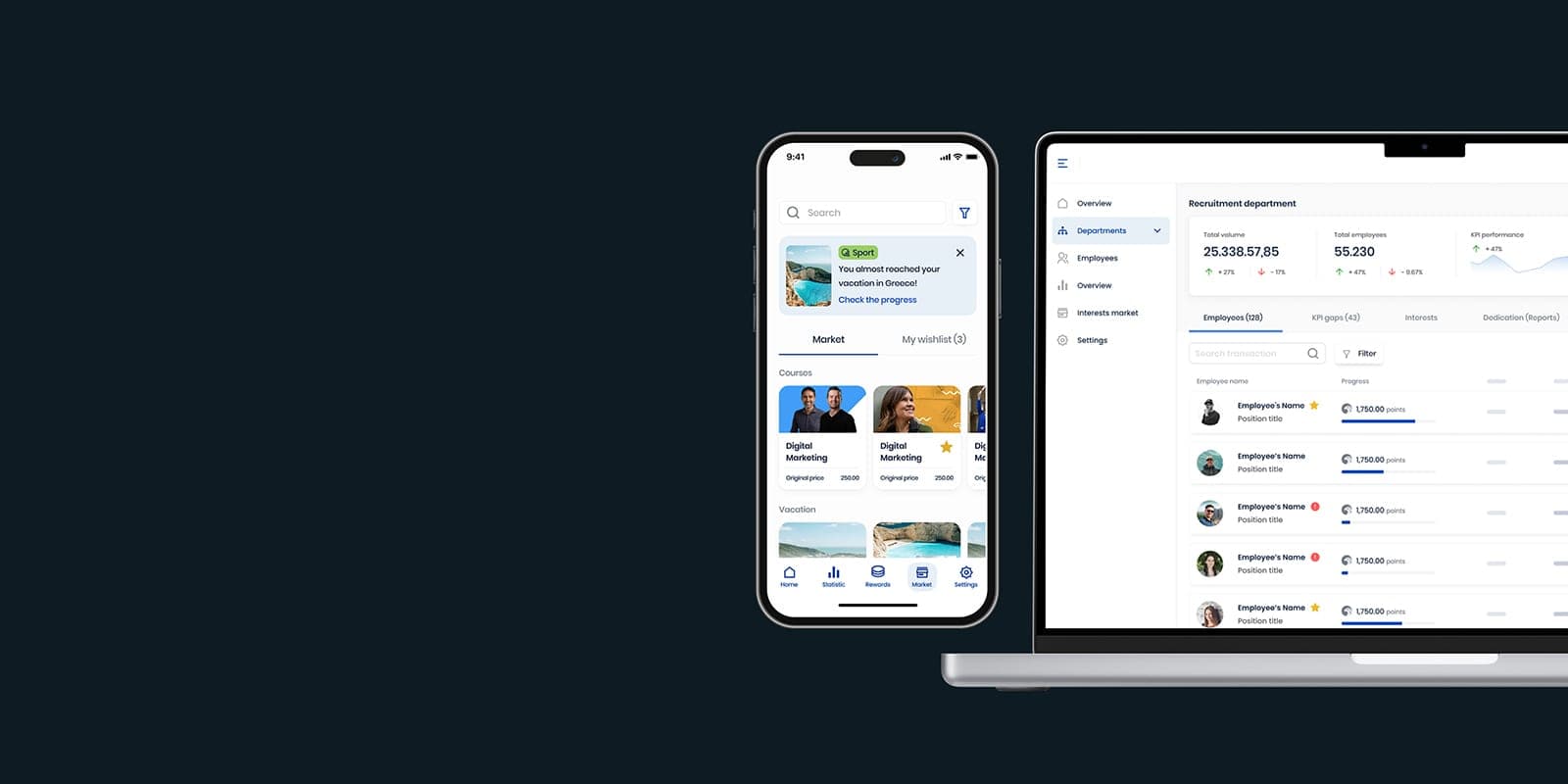
AI-powered human capital management
An HR platform for a large energy company: goals, performance tracking and rewards, with AI-assisted analysis for HR managers.Case study →
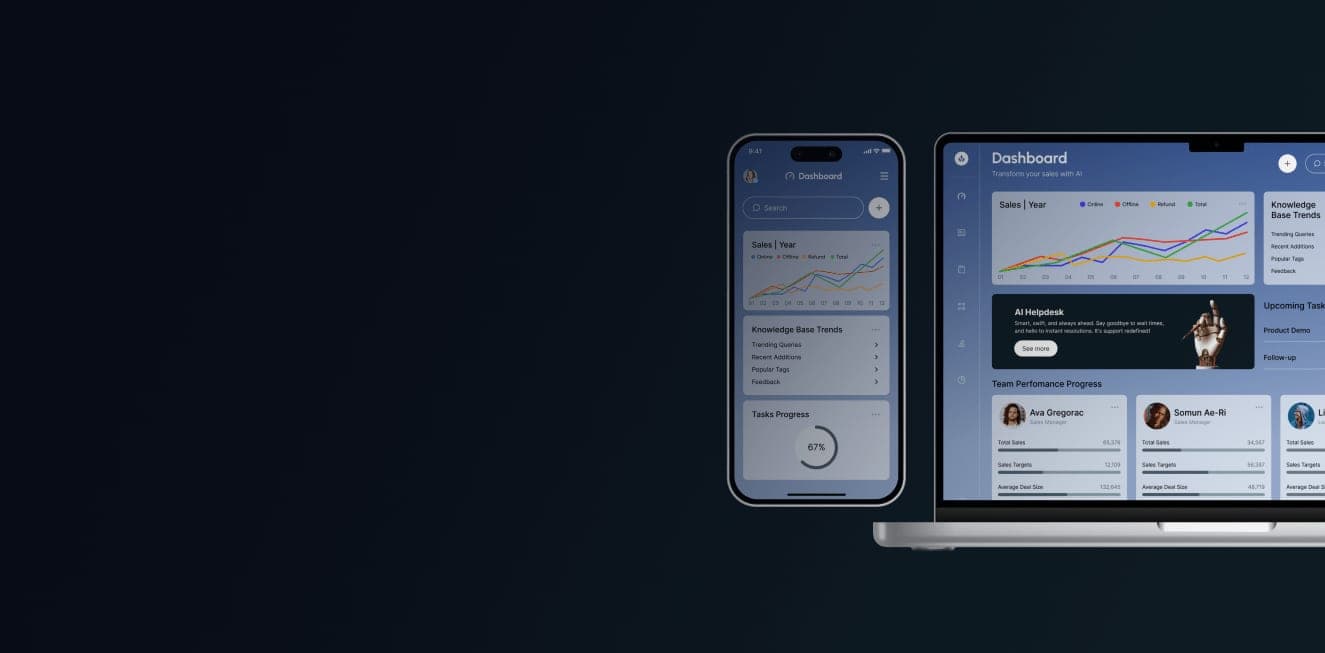
AI-powered sales platform
A sales platform that keeps customer data in one place: CRM, a helpdesk with suggested replies, a workflow builder and a knowledge base.Case study →
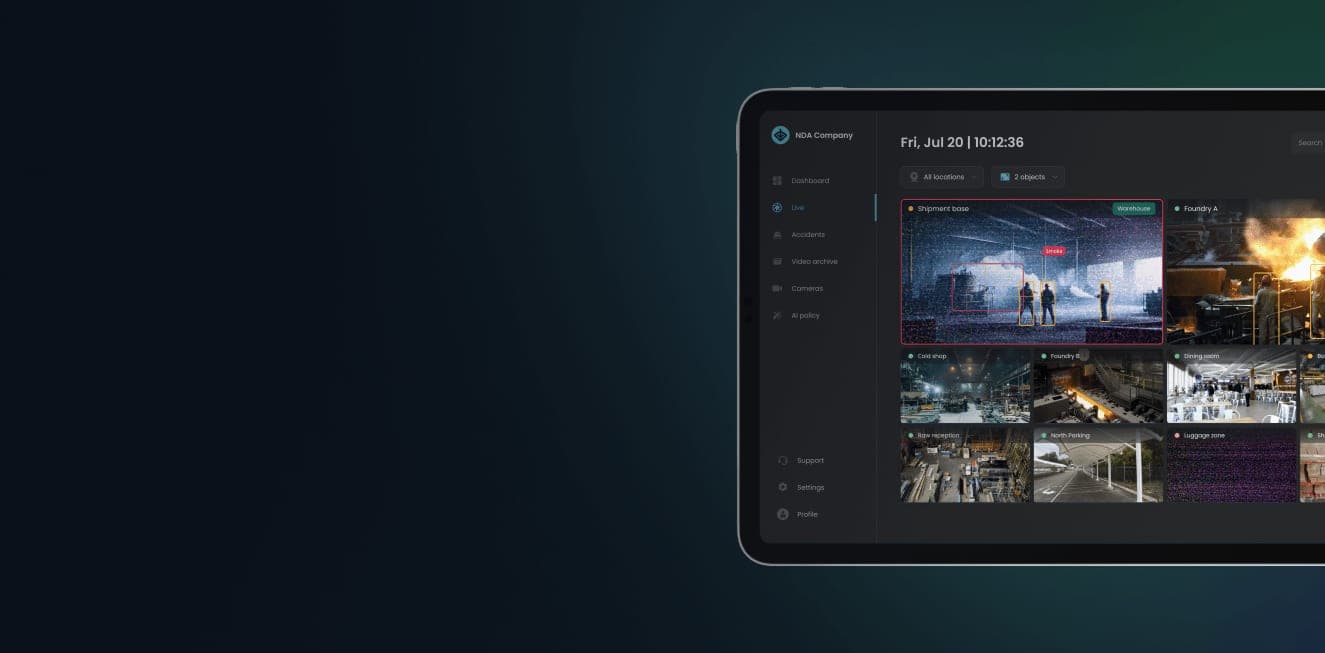
AI-powered video surveillance platform
A legacy video surveillance platform redesigned, with AI object detection, anomaly detection and reporting added.Case study →
First step
AI Opportunity Audit
How long
up to 2 weeks, including a spike
From you
a product lead; an outline of what data exists
You hold at the end
a prioritized list of AI features with the reasoning, and a clickable prototype of the first one (1–3 days inside the audit)
AI Feature Review
How long
one week, a designer and an engineer from our side
From you
access to the product and its analytics; the person who owns the feature
You hold at the end
why people do not use the feature and what to fix first, with the findings split into interface findings and model findings
Questions
What do your AI integration services include?
Two tracks. One adds AI features to your product: an audit of where AI fits, a clickable prototype of the strongest idea in your own screens, and the build into the system you run, on the Artkai AI SDLC. The other fixes AI features that already shipped and are not used, on both the interface side and the model side. Each feature comes with a plan for when the model is wrong.
How is AI Integration different from AI MVP Development?
AI MVP Development starts a new product. AI Integration starts from a product or platform you already run, with its users, data and release process, and adds AI where it changes what users get. When the AI should take a step of a business process rather than a feature of a product, that is Business Process Automation.
Can you add AI to a legacy system?
Yes. For a US maker of video surveillance software we audited a legacy platform, redesigned it and built in an AI module for object recognition, anomaly detection and reporting, next to the services it already ran.
Who decides what goes live?
On the Artkai AI SDLC each stage ends in a document one accountable person on your side authorizes, so the scope, the prototype and the release of every AI feature are signed off before they move on.
Do you offer enterprise AI integration services?
Yes. Enterprise AI integration services here mean AI added to platforms that large companies already run, such as the HR platform we built for a large energy company, with each release signed off by one accountable person on your side.
What do AI system integration services cover?
They cover how the AI connects to the system you run: which data it may read, which screen shows its output, who checks it and how it ships with the rest of the product.
Can you take an AI demo that never went live into production?
Yes, that is the first track. We add what a demo usually lacks before real users touch it: quality checks on real queries, integrations with the systems it reads from, access and cost control, and monitoring. It then goes in on the same stages as any other feature.
What if we shipped an AI feature and nobody uses it?
That is the second track. It starts with the AI Feature Review: one week, with access to the product and its analytics, a designer and an engineer together. You get the reasons people do not use the feature and what to fix first.
How do you tell whether the problem is the interface or the model?
The review splits every finding into one of the two. A feature people never reach, or cannot correct, is usually an interface finding. An answer that is wrong on real queries, or slow, or costly, is a model finding. Because a designer and an engineer read the same evidence, neither half is left for someone else.
Which adoption metrics do you track?
The share of users who reach the feature, completed tasks, return use and support tickets. We add the events that measure them, so each fix can be read against a number from your own product.
Do you change the interface as well as the model?
Yes. Where the feature lives, how the answer is presented, what the screen shows when the model is unsure or wrong, and how a person corrects a result are part of the same track as answer quality, sources, prompts, speed, cost and guardrails.