The full case study
AI-powered interior design app, step by step
On this page · 8 sections
About the business
The client came to us with an idea to create a unique solution and change entire interior design industry. He wanted to build a feature-rich AI-powered app that could help its users to:
- perform a redesign of any room
- select suitable furniture and decor
- find places where to buy those items
- find construction teams to redesign their rooms.
This solution should be a go-to option for both professional interior designer and common people wanting to redesign their homes.
We needed to create a unique AI algorithm that will be able to apply the knowledge of designers, trends, rules, and best practices to create the best design styles and options.
The app also needed to have a huge database with:
- a variety of design styles
- a list of construction companies in nearby area
- lists of stores where decor and furniture can be bought.
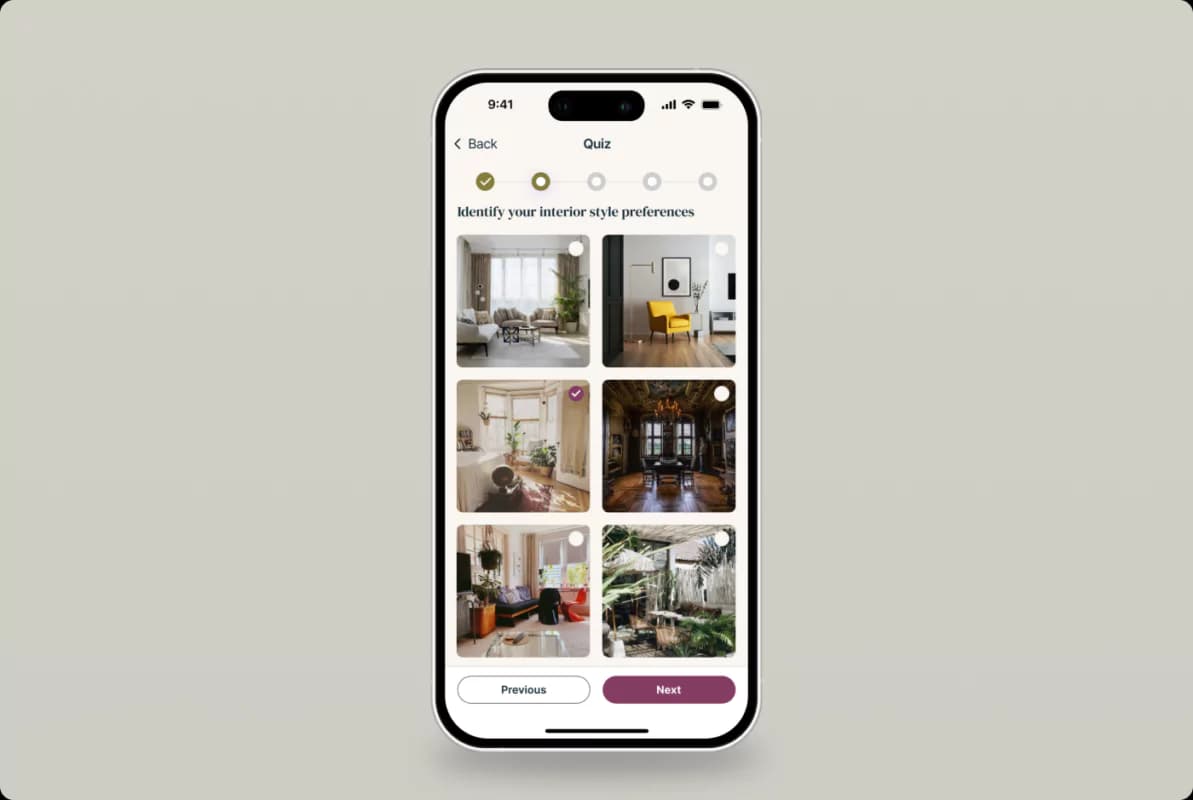
Our client also wanted to add a unique quiz that will provide users with questionnaire, then analyze their answers, and help to create a perfect design according to users’ preferences.
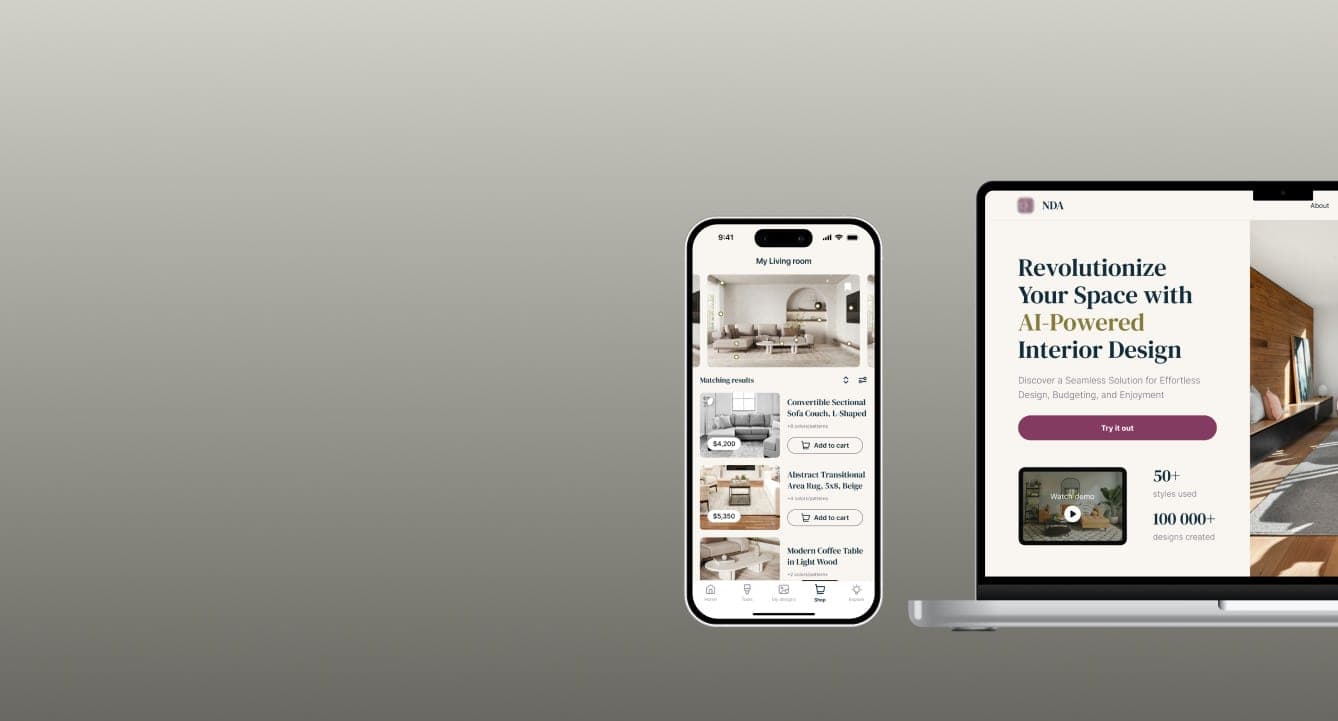
We liked this app idea and decided to help our client to turn it into a real project. We built an app for mobile devices and tablets, and also a web version of app for user who prefer designing on laptops and desktops.
Project tasks
- Complete a workshop and UX discovery to focus on project goals and prepare all necessary documentation including user maps and list of features per release.
- Create a design concept and then build a clickable app prototype to test the idea.
- Build an MVP of a web and hybrid mobile app with AI-powered feature set and user-centered design.
Project team
- 2 Front-end engineer
- 2 React Native engineer
- 2 Back-end engineers
- DevOps
- QA engineer
- Project manager
- Business analyst
- Software Architect
1 month for Discovery
3.5 months for App development
Application features
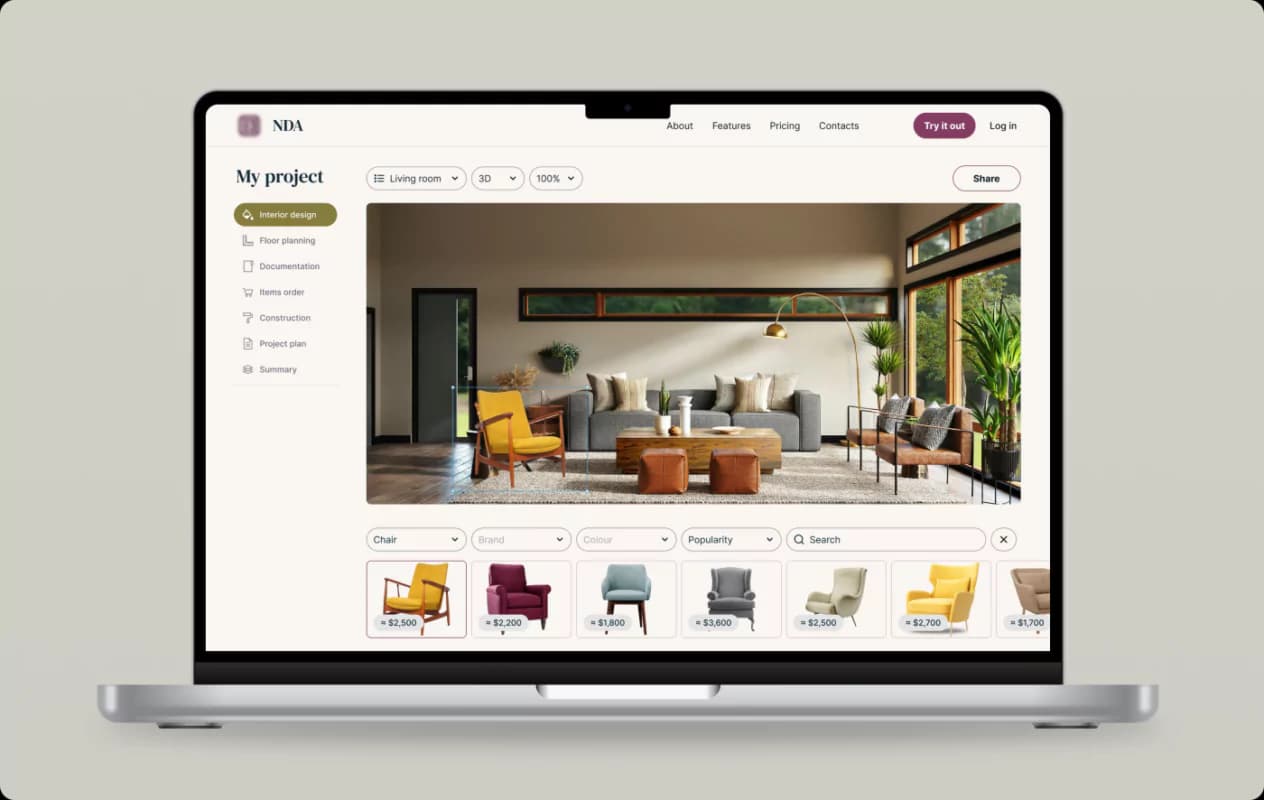
2D/3D room planning
Scan space with mobile app and create floor plan
Style quiz
Go through questionnaire to get design options
Room furnishing
Fill in the room with furniture or remove it
Virtual room tour
Take immersive 360 tour to view your room design
AI suggestions
Algorithm will offer best furniture/decor options
AI styles library
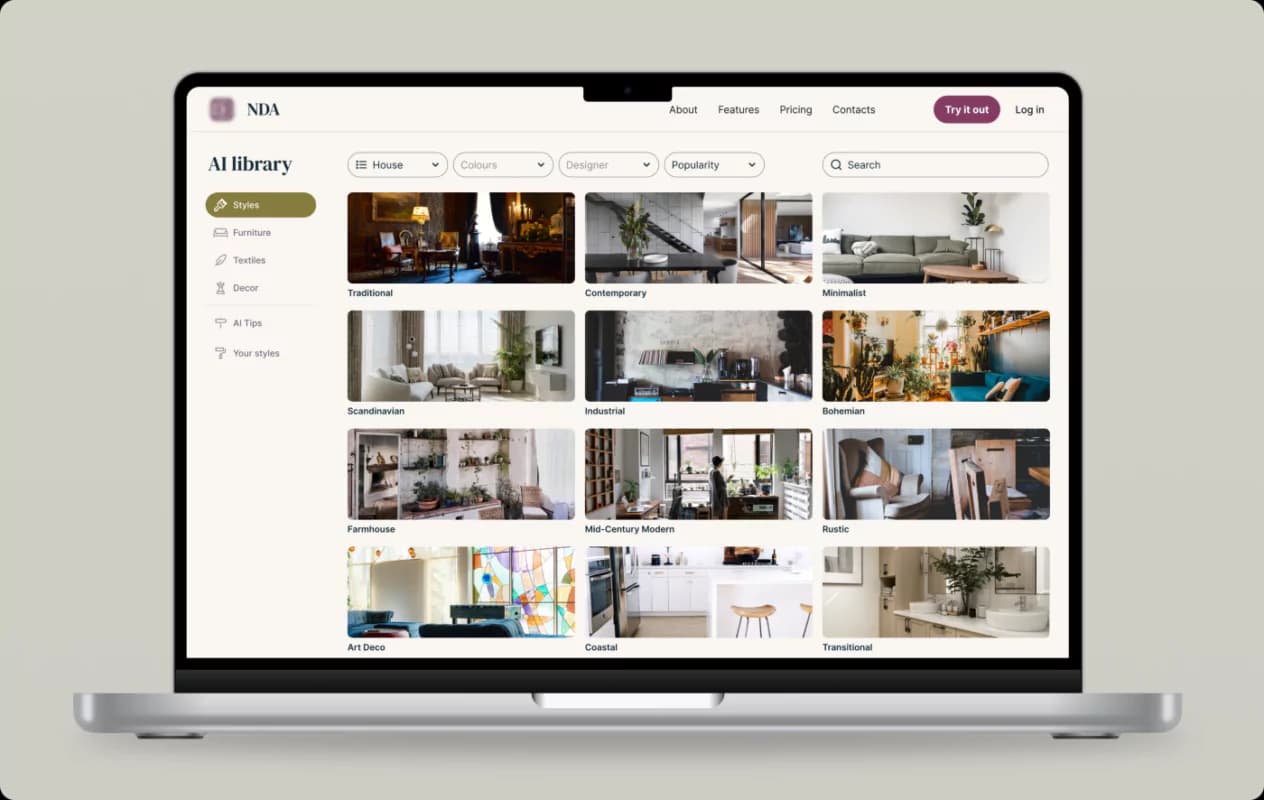
Explore AI-generated interior design examples
AI suggestions
Our client wanted to let app users create great designs without any professional help. To simplify design creation he needed a unique AI algorithm and questionnaire.
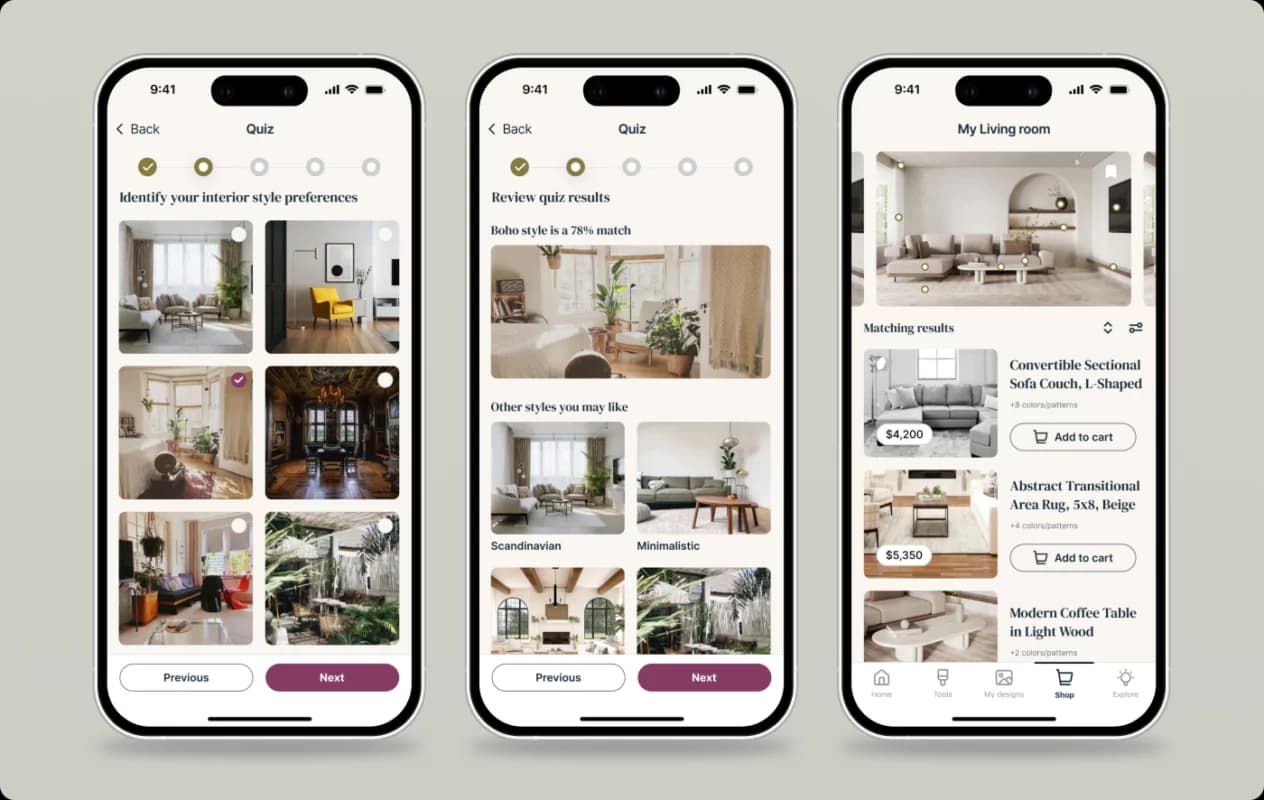
First the users will answers all questions about their design preferences and select appealing design options among all offered in the questionnaire. Also the questionnaire asks users to specify their approximate renovation budget and specify if they prefer to spend more money on certain furniture or decoration items.
Then AI algorithm analyzes all preferences and suggests certain style and furniture/decor options that match user request and budget. The user can view all details, check decoration prices and places where they can be bought.
The app also can suggest local construction companies that can help users’ execute house renovation or perform fast room redesign.
AI library of designs
Since the app was built for users who are not professional designers, our client wanted to implement a big library of AI-generated designs and styles. The users will explore those design examples to get inspired. They also can generate and add their own designs to the library.
While creating designs users can benefit from AI furnishing tips. AI takes into account all architectural elements like doors, windows, and walls and suggests a variety of suitable furniture pieces.
We also added an option for removing all furniture from the existing space. Users can upload a picture of their room and AI will make the room completely empty. Then users can redecorate that room using AI styles and suggestions.
Development approach
This app was designed with a large scale and complexity in mind. Therefore we selected microservices architecture.
- Most of the services were built on Node.js/Nest.js.
- For AI-related ones we used Python as a more suitable option.
- We used cloud services like AWS Lambda, AWS S3, AWS Elemental MediaConvert, etc. for specific tasks and also to improve scalability and performance of the app.
- For data storage and exchange we’ve used Amazon RDS and Amazon MQ.
Mobile application: Both iOS and Android apps were built from a single React Native codebase. Since React Native supports a huge library of functional and UI components, allows integration of native modules, and is compatible with most JS/TS libraries, it was a great choice for the app.
Web Application: Application has a public web UI for those who have no mobile app installed, and a web-based content management tool for the back office. We selected React for these web-apps with Next.js server-side rendering for SEO-friendly public content.
Outcome
In 4 months we have developed an MVP and successfully launched both web and hybrid mobile apps. At the moment our client is testing those apps with users and collecting their feedback.
It is too early to talk about any significant outcome, but we’d like to share that the user base of our client keeps growing. Users enjoy all app features, especially AI-powered ones that help them select budget-friendly furniture and decor.