The full case study
Winbank, step by step
On this page · 8 sections
About the business
Our team cooperated with a client from a solid European finance company that fosters a modern and innovative approach to traditional banking. Having many years of expertise in the banking niche, our client wanted to develop a brand-new application for web and mobile devices.
The idea was to build a banking app that would meet the evolving needs of its customers and offer personalized services while maintaining high security and industry standards. So, our goal was to help the client:
- select and prioritize right features,
- choose reliable third-party services,
- design and build a high-class banking app.
Project tasks
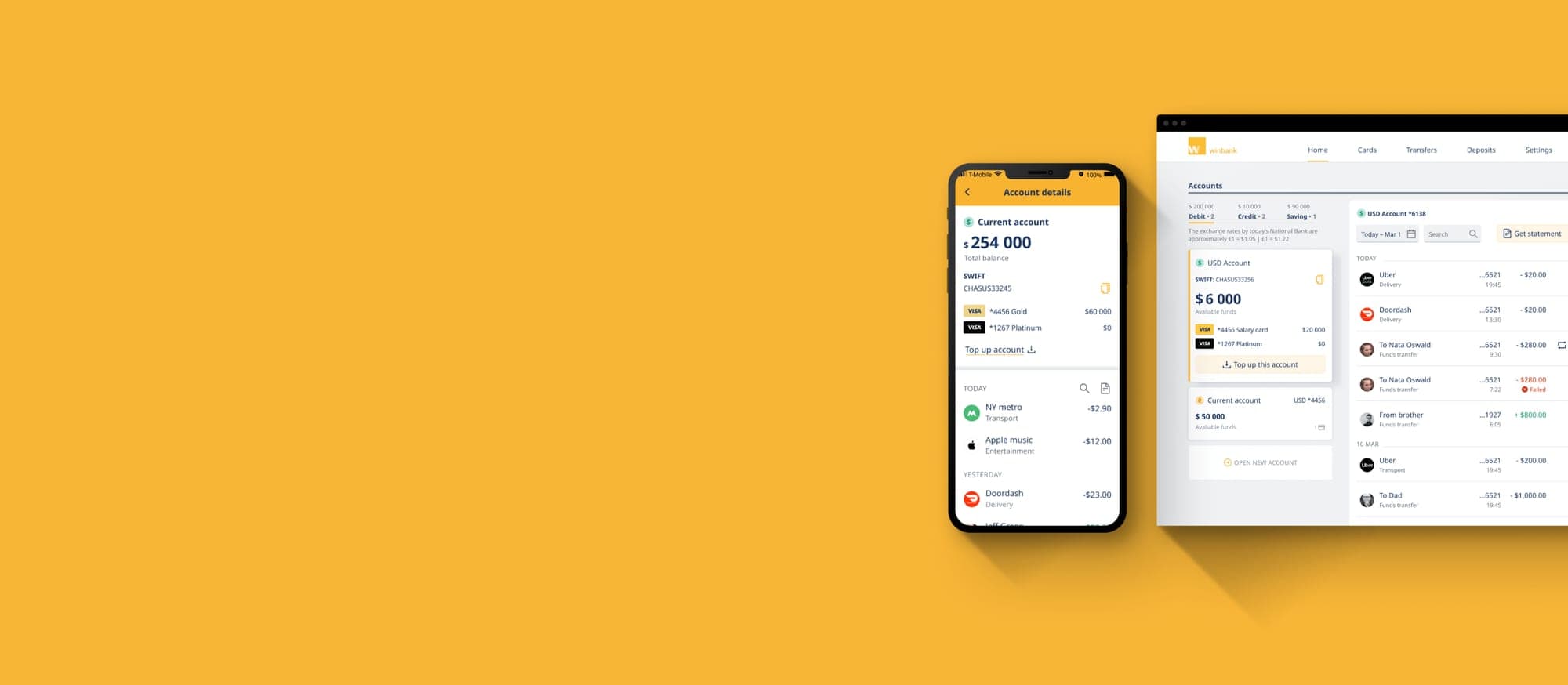
- Build a neobanking app to provide users with fast access to transactions and support services.
- Perform integration with go-to banking systems, payment gateways, and all necessary third-party services.
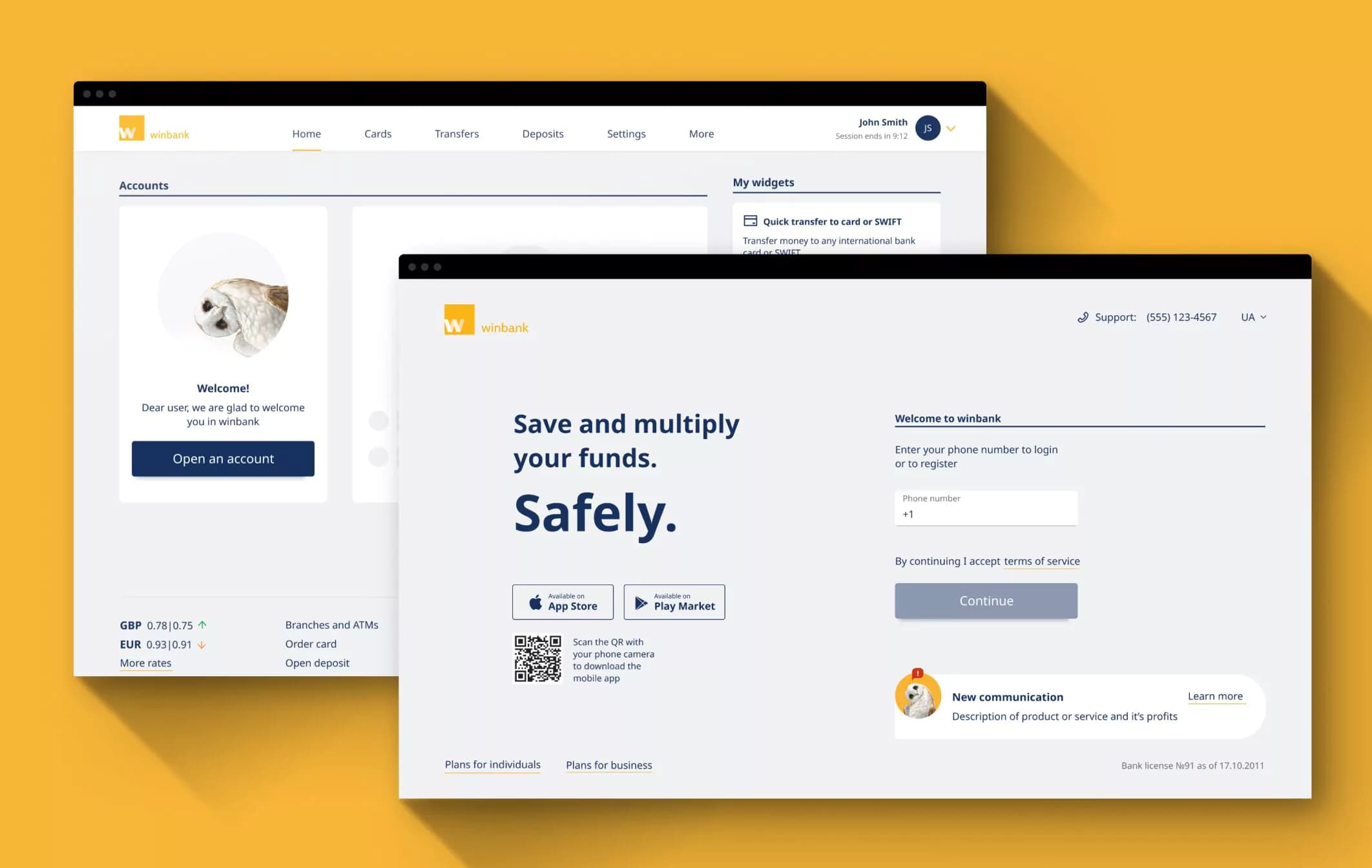
- Create a user-friendly and accessible design with intuitive onboarding and simple and clear navigation.
Project team
- 2 UX/UI designers
- 4 Front-end engineers
- 3 Mobile engineers
- 2 Back-end engineers
- Business Analyst
- 3 QA engineers
- Solutions Architect
- DevOps specialist
- Project Manager
6 months for Discovery & Design
11 months for App development & QA
Application features
Transaction options
Users can operate virtual cards and added cards from other banks
Payment templates
We added pre-defined templates to simplify the payment process
Utility payments
There are optimized payments for different utilities and services
Expense tracking
All users can easily keep an eye on their expenses and view receipts
Budgeting tools
Users can categorize expenses, set limits, and track financial goals
Customer support
An app has convenient 24/7 chat support for better customer service
Utility payments
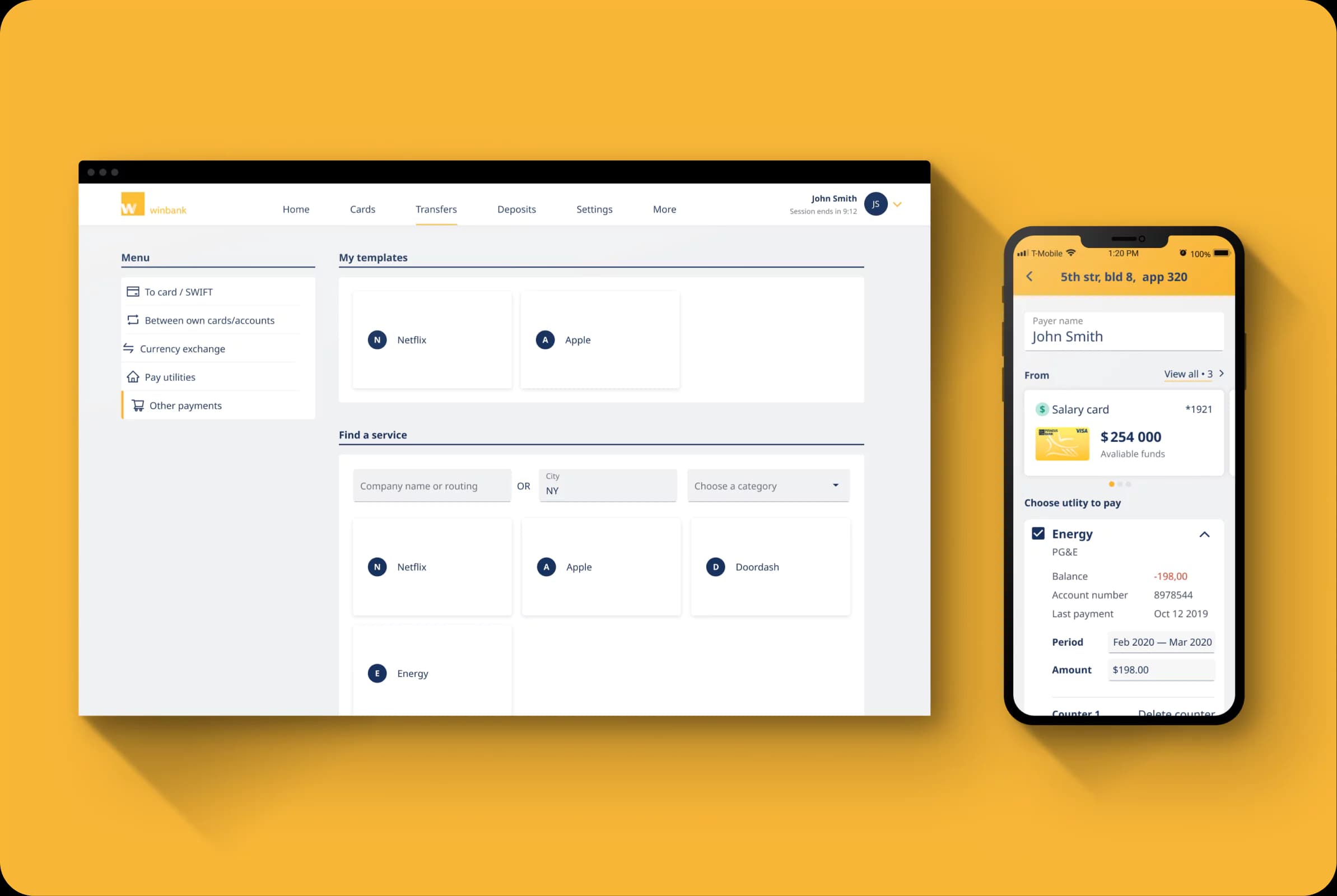
Our client wanted to integrate a feature that would allow users to conveniently pay their bills for different services, such as electricity, water, gas, internet, and more.
This feature should be very intuitive so that users of any age can open a banking app, navigate to this feature and pay for a service in one click.
To make utility payments more smart and convenient, we included such options:
- Bill management – to view a list of the upcoming utility bills and due dates within the app.
- Payment reminders – users can set preferences for receiving reminders about upcoming utility bill payments via push notifications, email, or SMS.
- Bill history and receipts – the app maintains a history of past utility payments and lets users access digital receipts for each transaction.
Budgeting tools
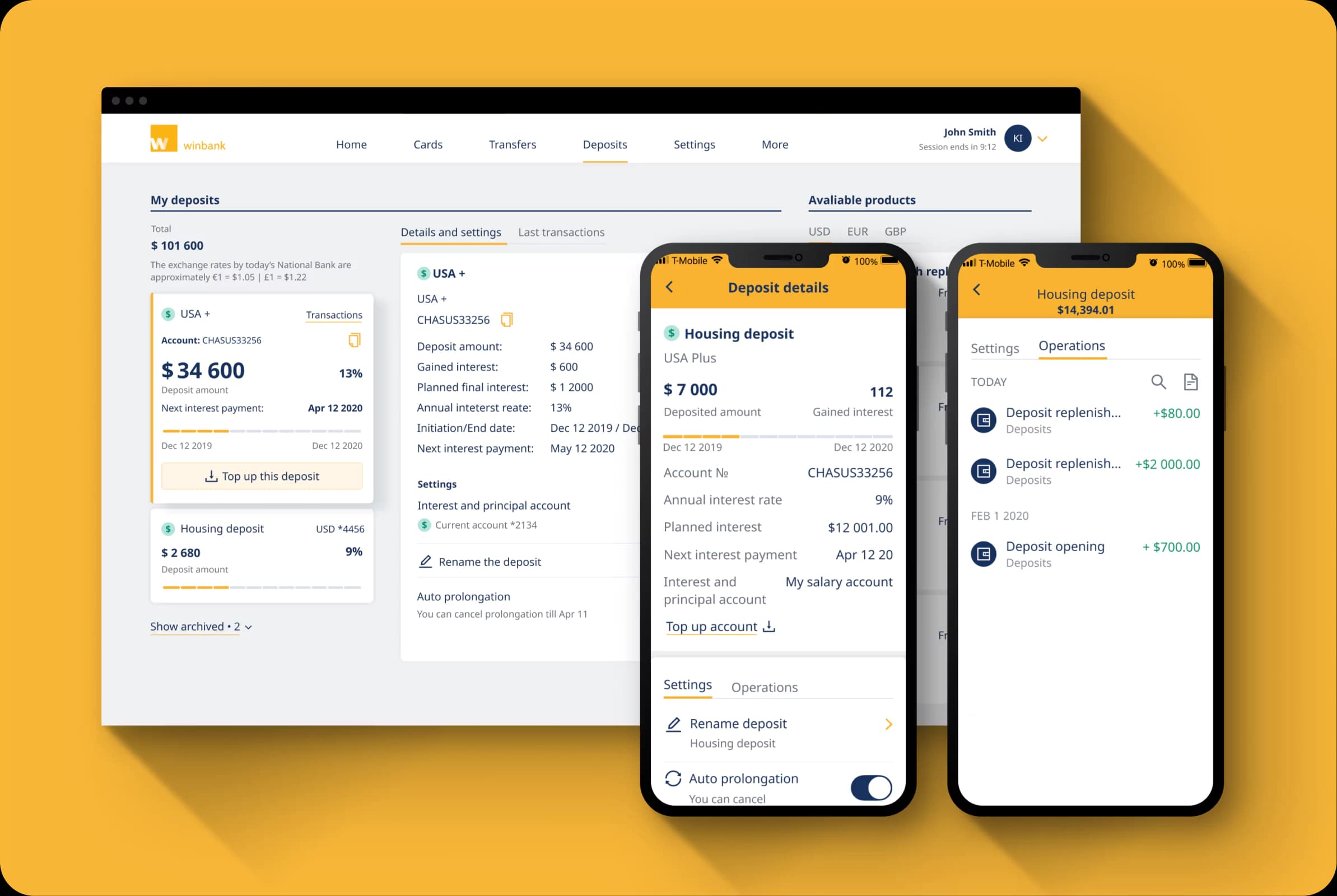
The budgeting tools we integrated into this banking app empower users to manage their finances effectively by setting budgets, tracking expenses, and setting different financial goals.
Here is what tools we included and how exactly they work:
- Expenses categorization – users can divide their expenses into predefined categories (e.g., groceries, transportation, entertainment) or custom categories based on their spending habits.
- Budget setting – it’s easy to set budget limits for each expense category, specifying the maximum amount users are willing to spend within a certain time period.
- Financial goal setting – users can set long-term financial goals, such as saving for a vacation, buying a house, or building an emergency fund. The app helps users break down their ambitious goals into smaller milestones and track their progress over time.
- Expenses analytics – users can perform analysis of their expenses, including detailed breakdowns of their spending by category, merchant, time period, and payment method.
Development approach
To build a highly secure and feature-rich neobanking solution, we’ve selected and used a set of proven technologies:
- TypeScript was used for both front-end (React) and back-end (Node.js) parts of the application to write stable source code and decrease future maintenance costs.
- React was selected to speed up front-end development and make code maintenance easier.
- Swagger was used for API documentation and testing.
- We’ve also created a robust REST API as the main communication gateway between different product parts.
Outcome
It took us 17 months to build a feature-rich neobanking solution for our client. Our team wrapped up high-quality code into a trendy and user-friendly design that was highly appreciated by the app users.
Our client achieved significant growth in active users and observed how transactions performed per month by the users skyrocketed. The app turned out to be accessible, intuitive and convenient. So, the team of our client now processes 10X fewer customer support requests.
800K loyal banking app users and the number keeps growing 1.9X higher client satisfaction and retention rate 5X more transactions performed by banking app users monthly