The full case study
PulseCore, step by step
On this page · 6 sections
About the business
Acutest is an innovative tech company operating in the field of electronic testing and certification. Serving industries such as aerospace, automotive, healthcare, and renewable energy, Acutest ensures that electronic products meet rigorous safety, quality, and performance standards.
Known for precision and reliability, Acutest’s growing clientele demanded increased operational efficiency, scalability, and accuracy in testing workflows.
So to meet evolving clients’ needs, Acutest cooperated with our team and asked us to design and develop an innovative testing management platform offering an advanced feature set and performance.
Project tasks and challenges
Acutest wanted to build a new solution able to modernize its testing and certification operations to achieve the following objectives:
- Centralize data management by consolidating fragmented data systems into a single platform for seamless access and analysis.
- Automate critical workflows to minimize manual effort and reduce processing time.
- Streamline adherence to complex industry regulations through automated tracking and reporting.
- Improve client experience by delivering real-time updates and detailed reports to clients with greater transparency and ease.
- Build a scalable solution that could accommodate increasing volumes and complexity of testing demands.
After a consulting session, we discovered that Acutest company experienced several major challenges they wanted to solve by releasing new multifunctional solution:
- Data Silos. Fragmented data across multiple platforms made it difficult to access, analyze, and generate comprehensive insights.
- Manual-Driven Processes. Inefficient workflows relied heavily on manual efforts, leading to delays and an increased risk of errors.
- Complex Regulatory Landscape. Navigating stringent and evolving industry standards required documentation, consuming significant resources.
- Scalability Limitations. Existing systems lacked the capacity to efficiently handle growing testing volumes and diversified requirements.
- High Client Expectations. Clients demanded faster results, real-time progress tracking, and customized reporting capabilities, which existing processes couldn’t support.
Project team
- Project Manager
- 2 UX/UI Designers
- 2 Front-end Developers
- 3 Back-end Developers
- 2 QA Engineers
- Solution Architect
5 months for design
9 months for development
App / Platform features
Home Screen
The home screen provides a comprehensive overview of the factory’s current capacity and the available machine capacity for potential sales. This dashboard-style interface includes:
- Real-time metrics displaying current factory utilization rates, available machine hours, and production potential.
- Sales opportunities highlighting machines with unused capacity that can be allocated for new tasks or sold.
- Insights and alerts offering actionable insights about under-utilized machines and impending capacity bottlenecks.
Scheduler
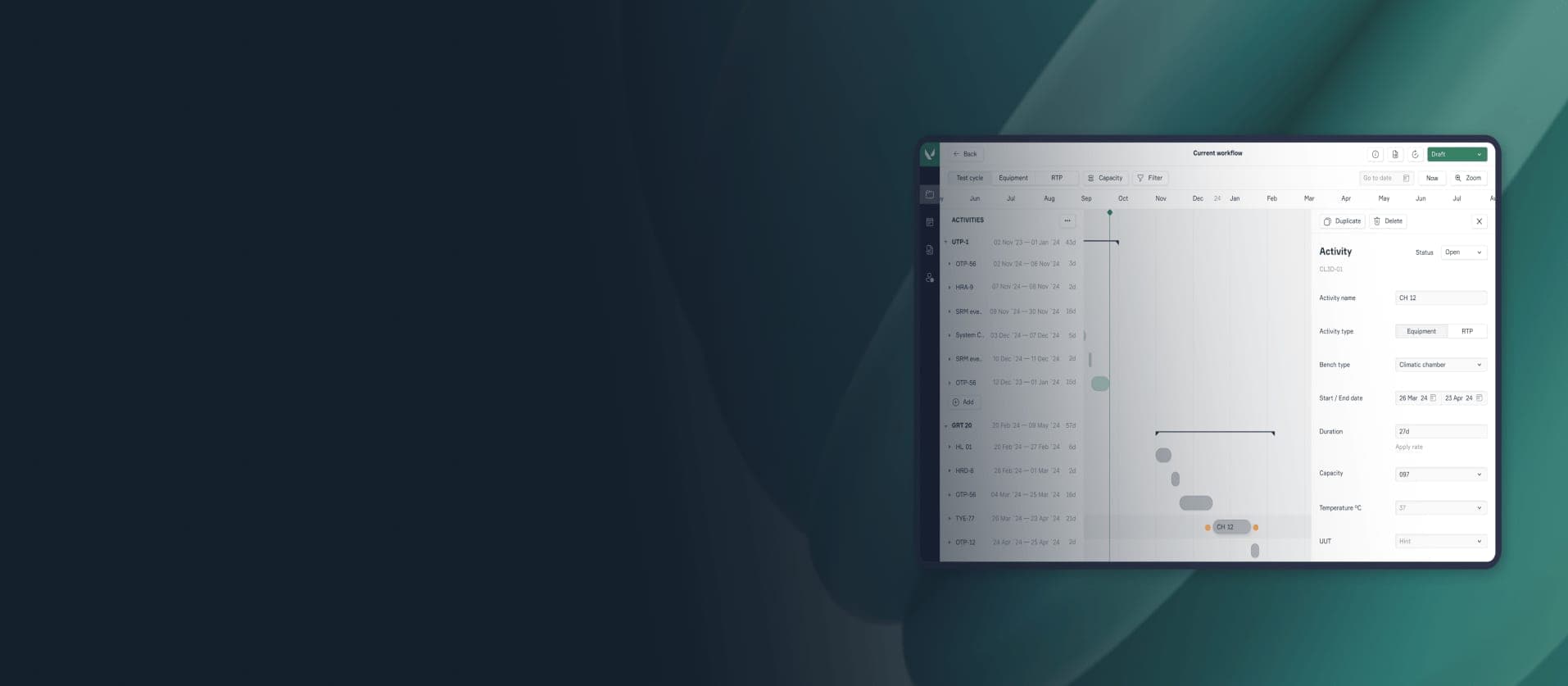
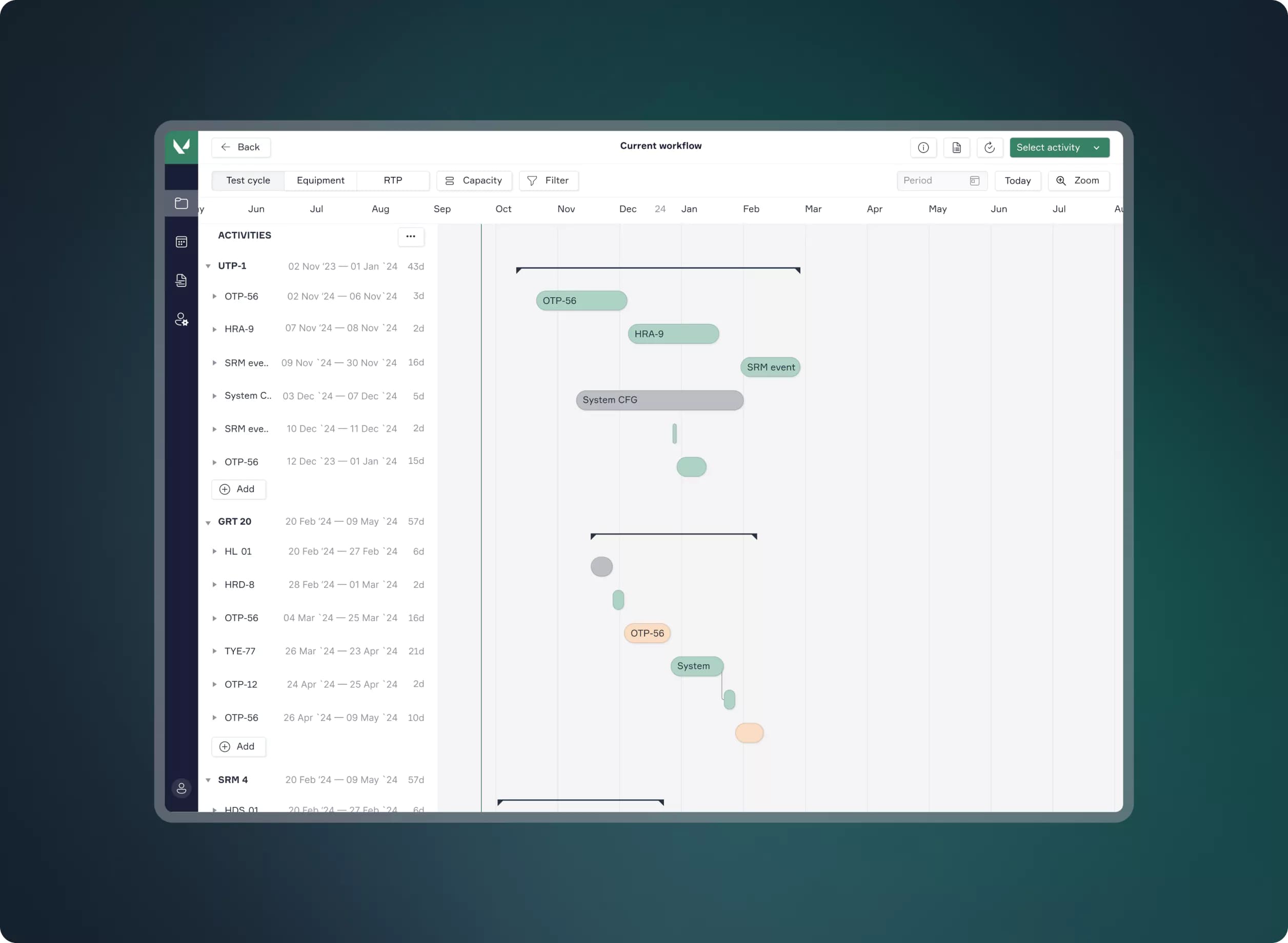
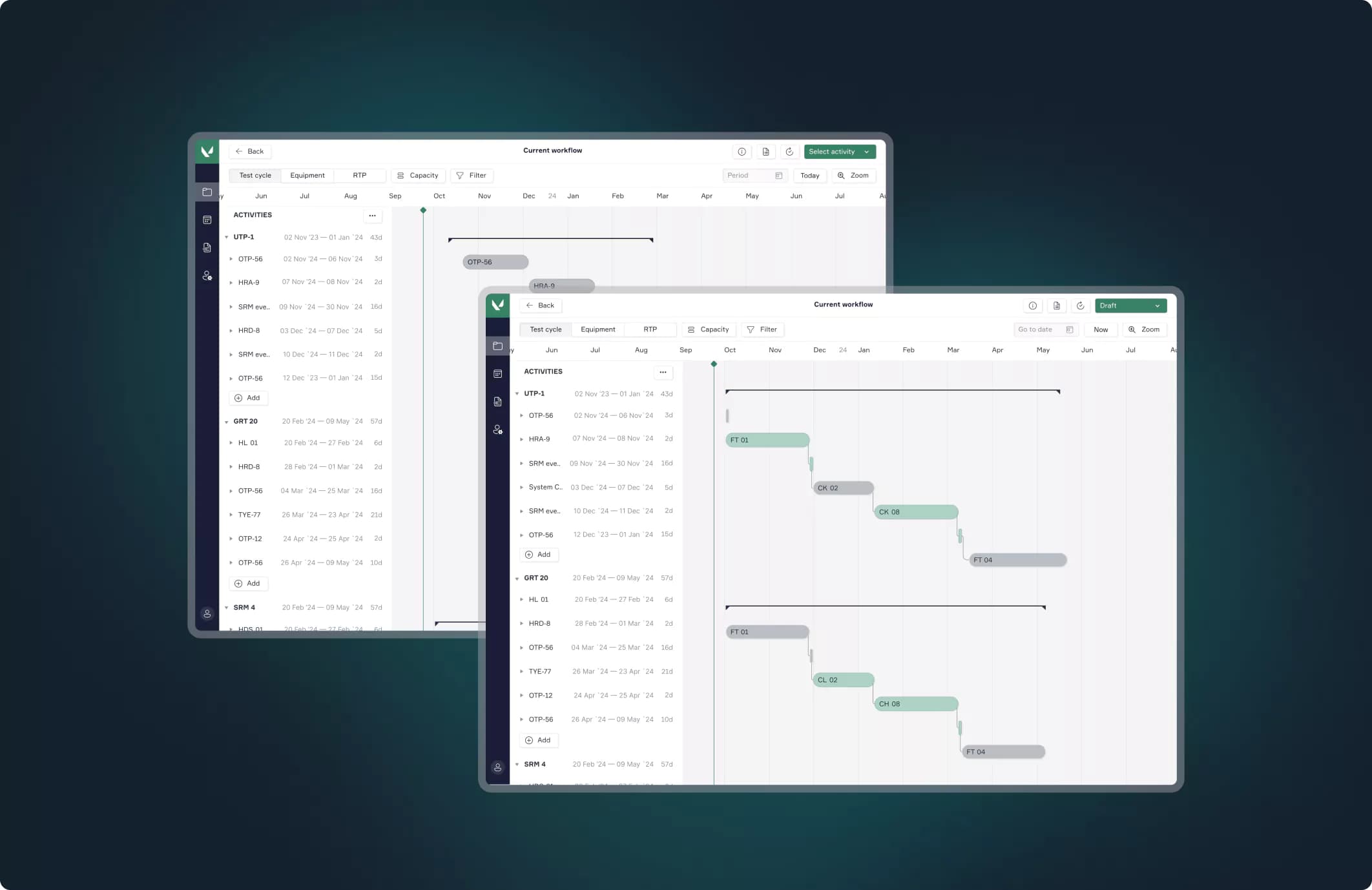
The scheduler is designed as an advanced planning tool, leveraging the best practices from modern testing management software. The key features of the scheduler include:
- Task-to-resource matching. It automatically compares assigned tasks with available resources to identify capacity gaps.
- Drag-and-drop interface that allows users to easily move unassigned tasks or create new ones directly on the schedule.
- Visual indicators displaying conflicts such as overlapped activities or pre-booked resources to avoid scheduling errors.
- Sales activity helps to identify and mark tasks that are part of a sales process, offering better context for the team.
- Machine scheduling provides a detailed view of machine schedules, ensuring optimal utilization.
Checklist Builder
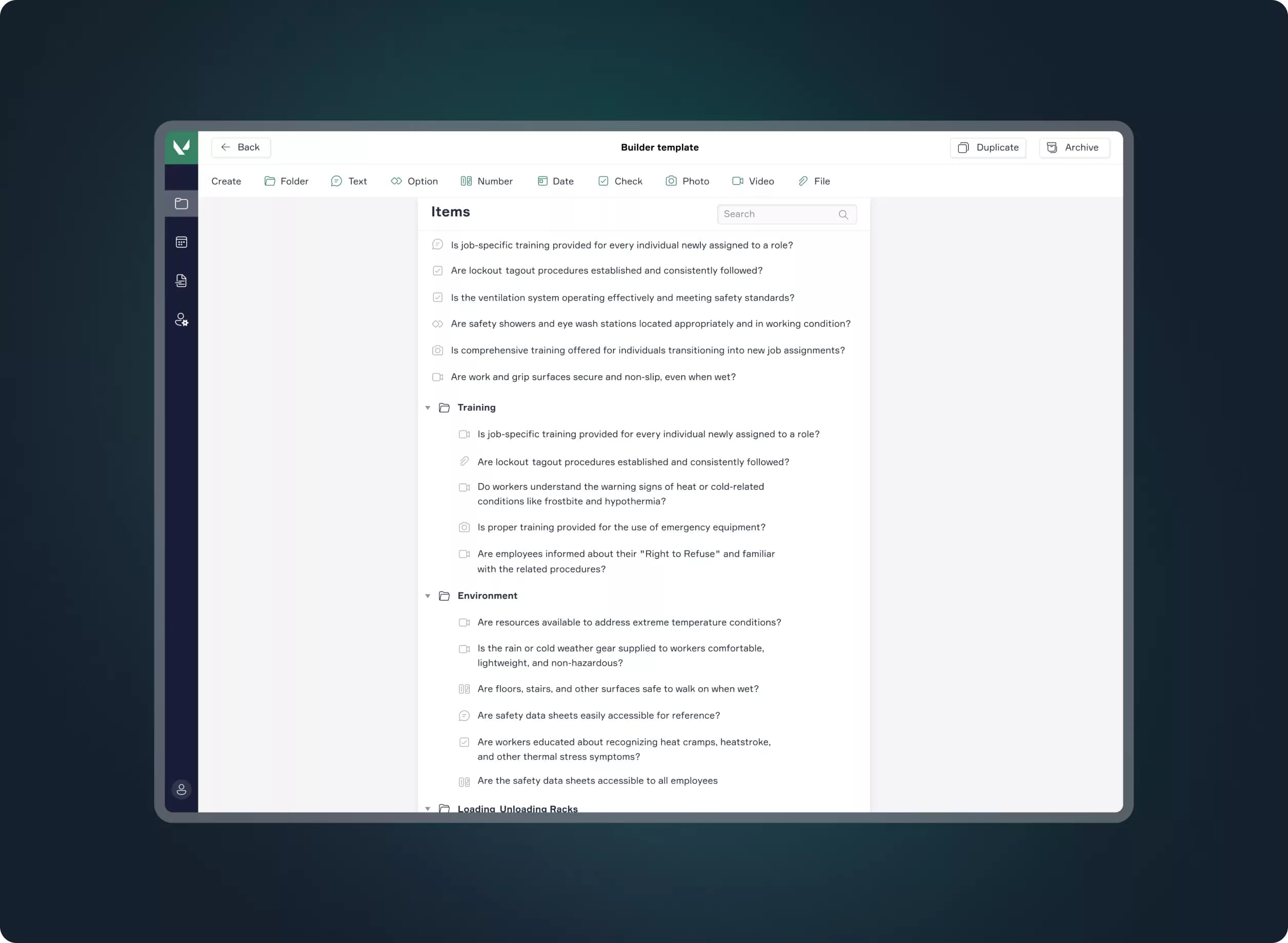
The checklist builder offers a drag-and-drop interface for creating custom workflows that automate and validate tasks in the field. Its functionality includes:
- Customizable steps. Managers can create lists of checks, define sequences, and set rules for execution.
- Validation Features. It supports data input validation (e.g., machine status), QR code scanning, and other field-level verifications.
- Efficiency Optimization. It automates repetitive tasks to reduce errors and improve execution efficiency.
- Real-time updates helping field teams to update checklist status, ensuring accurate tracking of task completion.
Testing Workflow Monitoring and Management
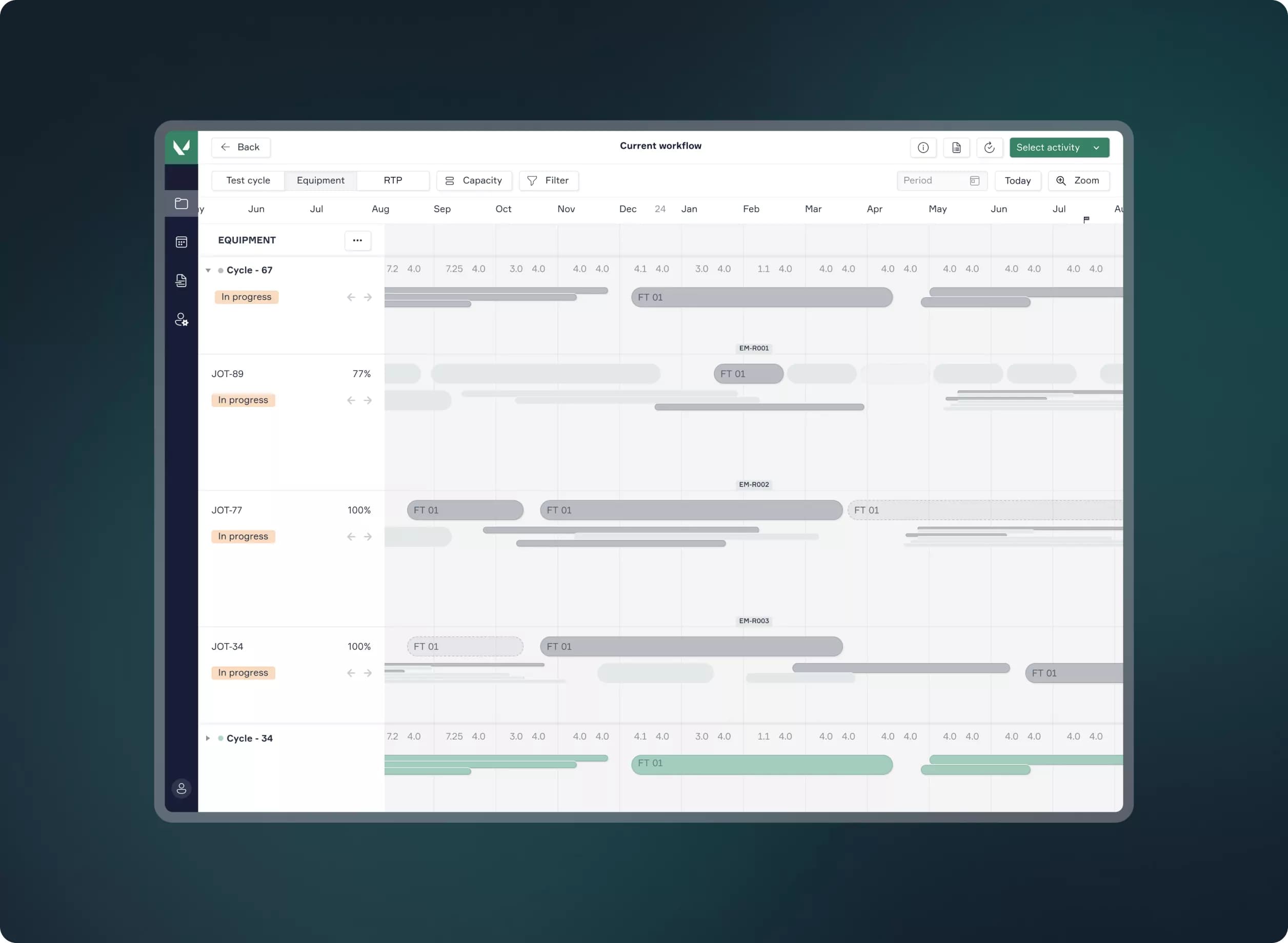
This platform feature provides complete oversight and management of testing workflows including:
- Workflow visualization. It displays the status and progress of ongoing testing tasks, highlighting any bottlenecks or delays.
- Automated notifications that alert users about critical updates, such as test failures, anomalies, or delays.
- Dynamic workflow customization with an option to display conflicts such as overlapped activities or pre-booked resources to avoid scheduling errors.
- Syncs with testing machines to automatically log results and track performance metrics in real-time.
Calendar
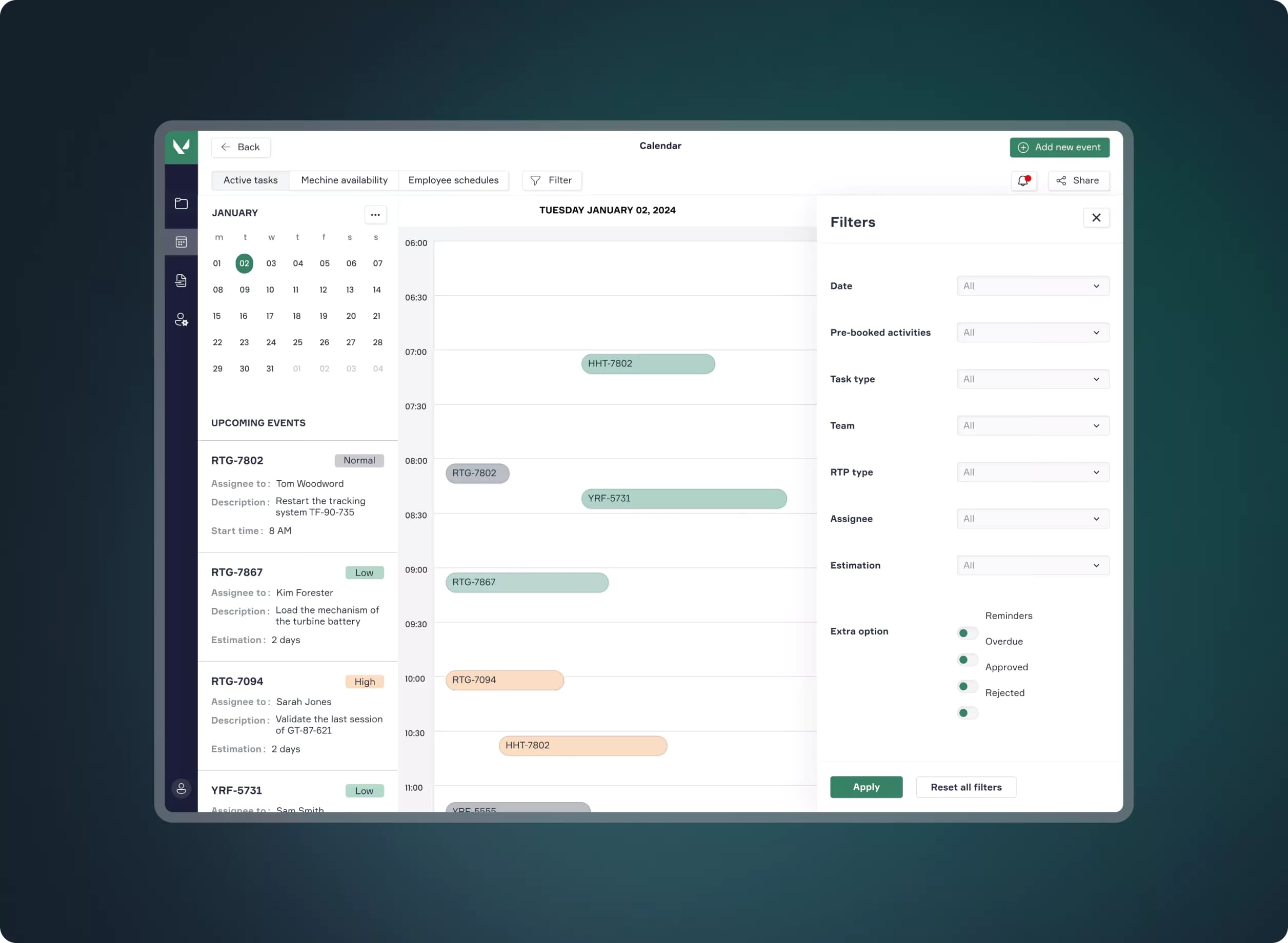
The calendar is a centralized tool for scheduling and tracking key activities across teams and machines. While integrating it into platform we added a little bit of extra:
- Shared team view and a collaborative calendar showing tasks, machine availability, and employee schedules.
- Pre-booked activities and pre-scheduled tasks view to avoid conflicts.
- Automatical alerts about upcoming deadlines, tasks, or sales-related activities.
- Option to filter activities by task type, team, or machine for a focused view.
New User Onboarding
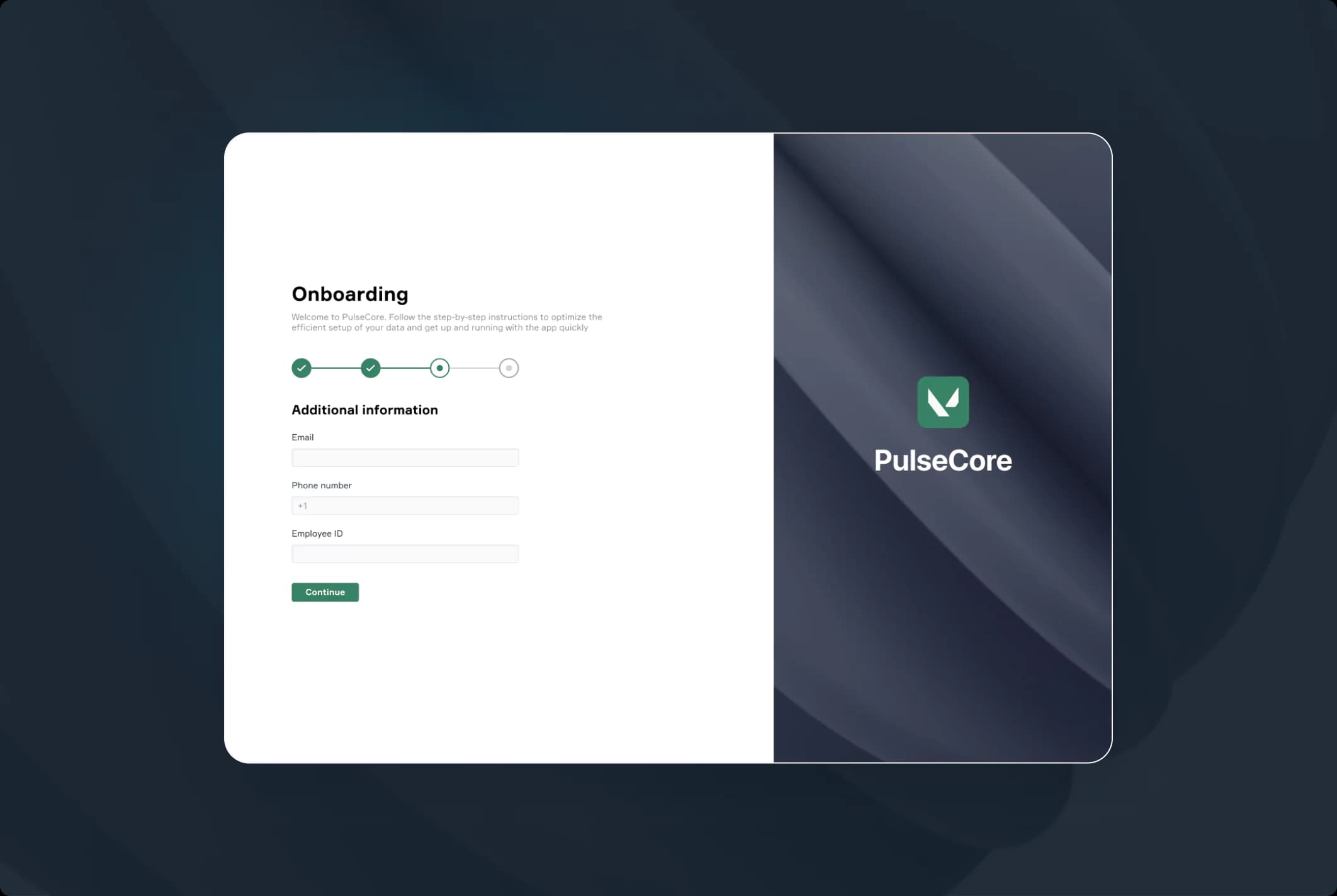
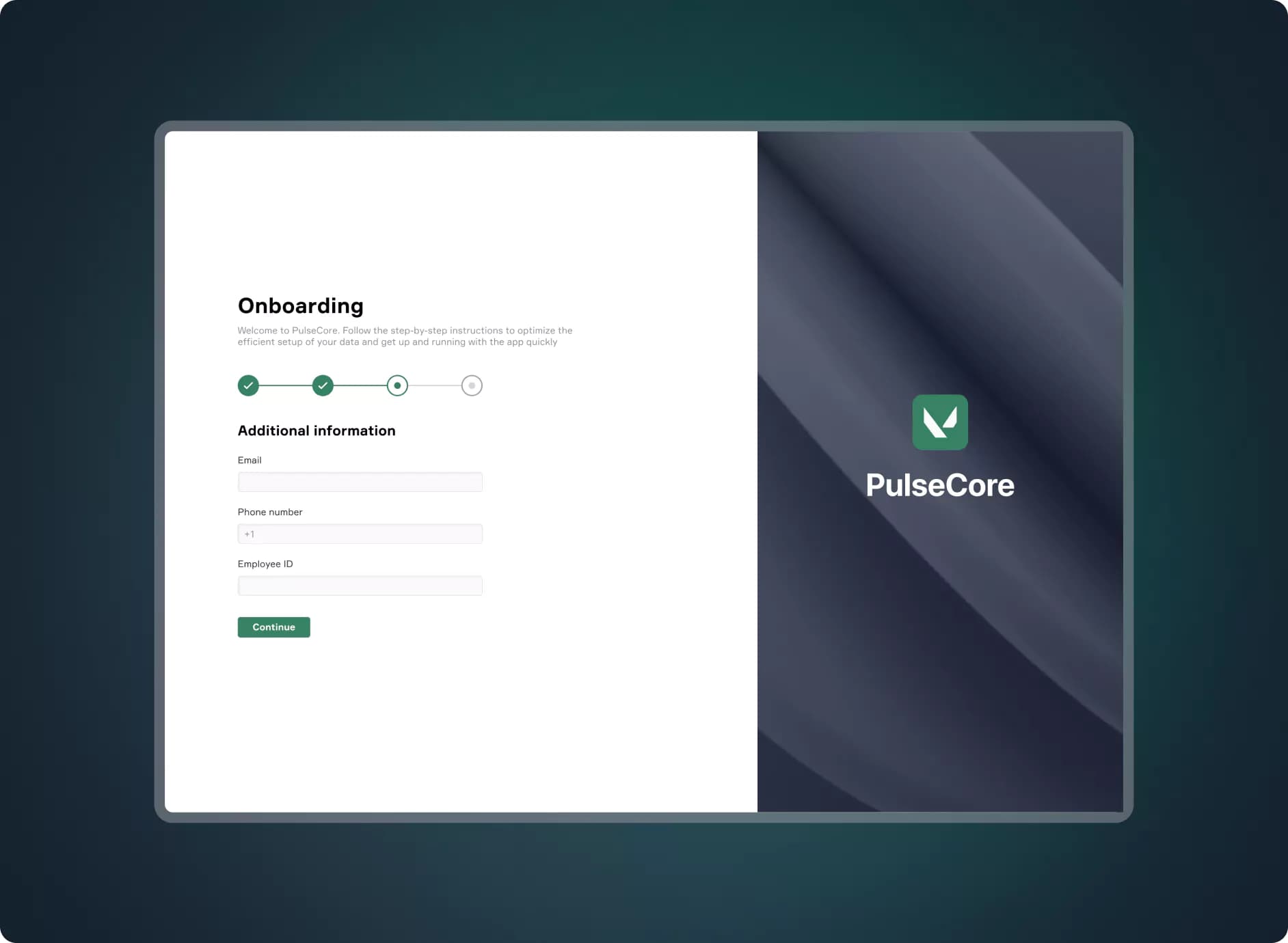
The onboarding feature ensures a seamless and user-friendly introduction to the system for new users, providing them with guided instructions and training materials. Here is what we included in the onboarding process:
- Step-by-step interactive tutorials to familiarize new users with key functionalities.
- Personalized setup allowing users to configure dashboards, notifications, and preferences based on their roles.
- Provides access to FAQs, video tutorials, and troubleshooting guides from the corporate knowledge base.
- Progress tracking that provides feedback or reminders for incomplete onboarding steps.
Development approach
Our approach ensured that design and development were carried out in parallel to maximize efficiency and deliver a high-quality solution. Here is what phases the whole process included and what we performed during those phases:
Discovery Phase
- An extensive research to identify Acutest’s unique needs and challenges.
- Defining core requirements and prioritizing features to address operational inefficiencies and compliance demands.
Design and Prototyping
- Creation of wireframes and prototypes to visualize workflows and interfaces, focusing on a user-friendly experience.
- Iteration of designs based on client feedback to ensure alignment with business goals.
Agile Development
- Adopted an Agile methodology to allow for flexibility and iterative improvements during development.
- Parallel development of backend systems and frontend interfaces to reduce delivery time.
Quality Assurance and Testing
- Rigorous testing to validate functionality, performance, and security.
- Ensured compliance with industry standards and seamless integration of testing equipment.
Technology stack
To build a scalable, efficient, and user-friendly testing management platform, we selected the advanced technology stack. The selected tech stack delivered the following advantages to Acutest and the PulseCore platform:
- Enhanced performance – React’s virtual DOM and Node.js’s non-blocking I/O model ensured faster rendering and response times.
- Scalability – AWS Lambda and Node.js’s event-driven architecture allowed the platform to handle increasing workloads seamlessly.
- Cost efficiency – Serverless functions reduced operational costs, while a unified JavaScript/TypeScript stack streamlined development and maintenance.
- Improved developer experience – NestJS’s modular structure and Material-UI’s pre-built components accelerated development and ensured code maintainability.
- Superior UX – Responsive, intuitive design delivered a seamless experience across devices, improving client satisfaction.
Outcome
The PulseCore platform we developed for Acutest successfully addressed the company’s critical challenges while delivering significant results. With PulseCore, our client achieved:
- 100% data consolidation into a centralized system, streamlining data accessibility and management.
- 70% reduction in manual effort and a 40% improvement in processing time thanks to automated workflows.
- 3x scalability to meet growing testing demands without compromising system performance.
We delivered the first version of the product on schedule, meeting client expectations. Acutest expressed high satisfaction with the results, and our collaboration continues. We now provide ongoing support, maintenance, and assistance in driving further product evolution to ensure PulseCore stays ahead of industry demands.