The full case study
CareLink, step by step
On this page · 7 sections
About the business
MedConnect Solutions is a leading provider of healthcare communication platforms. They deliver secure and efficient communication solutions tailored to the needs of hospitals, clinics, and healthcare systems.
Established over a decade ago, the company has grown to serve over 300 healthcare institutions across the United States, including some of the largest hospital networks and specialized care centers.
With a team of 200+ professionals, MedConnect Solutions is committed to transforming healthcare communication through cutting-edge technology that enhances care coordination, improves patient outcomes, and ensures compliance with healthcare regulations.
MedConnect team came to us with the request to redesign and modernize their existing chat system created for seamless communication between doctors, healthcare staff and clinics. The system was built using outdated technologies and required UX redesign, and that’s exactly what our team performed.
Project tasks and challenges
MedConnect Solutions faced a significant challenge in unifying communication across multiple departments within large, complex hospital networks.
The existing systems were fragmented, leading to delays in sharing critical information, inefficient workflows, and potential risks to patient safety.
As a company known for delivering clinical information to healthcare teams when and where it matters most, MedConnect needed to enhance its platform to ensure that healthcare teams could receive and act on critical information swiftly and securely. Taking into account the client’s challenges and objectives, here are what tasks we needed to accomplish:
- Rebuild the existing communication solution, addressing and solving UX/UI, technical, and operational issues.
- Ensure compliance with healthcare regulations, particularly concerning secure messaging and data privacy.
- Expand the platform feature set to enhance collaboration among healthcare professionals.
- Ensure support of large-scale operations by shifting from old to new tech stack and modernizing the platform.
Project team
- Project Manager
- Business Analyst
- 2 UX/UI designers
- 3 Front-end developers
- 2 Back-end developers
- 3 QA engineers
- Software Architect
- DevOps specialist
4 months for audit & design
8 months for development & testing
CareLink was a legacy product of MedConnect Solutions, initially built using an older technology stack that included:
- Java for the web application
- Objective-C for iOS app
- Java for Android app
While this stack was sufficient at the time of development, it began to show its age as new technologies and user expectations evolved. The performance, scalability, and UX provided by these older technologies were no longer up to the standards required for modern healthcare applications.
The increasing complexity of maintaining and enhancing the system with this outdated stack became a bottleneck, preventing MedConnect from delivering the level of innovation and efficiency their users demanded.
After the tech and UX audit, we made the decision to modernize the tech stack. Here are the technologies we selected and the reasons behind each choice:
- React for the Web App: React was chosen to replace the outdated Java-based web application since it offers a highly dynamic and responsive frontend, allowing for smoother and more intuitive user interactions.
- Swift for iOS App: We transitioned from Objective-C to Swift for the iOS application. Swift is not only faster and more efficient, but it also provides better security features, improved memory management, and easier maintenance.
- Kotlin for Android App: The transition from Java to Kotlin helped us build a more robust and future-proof Android application with no bugs and more concise code.
Platform Features
Doctor-specific chat features
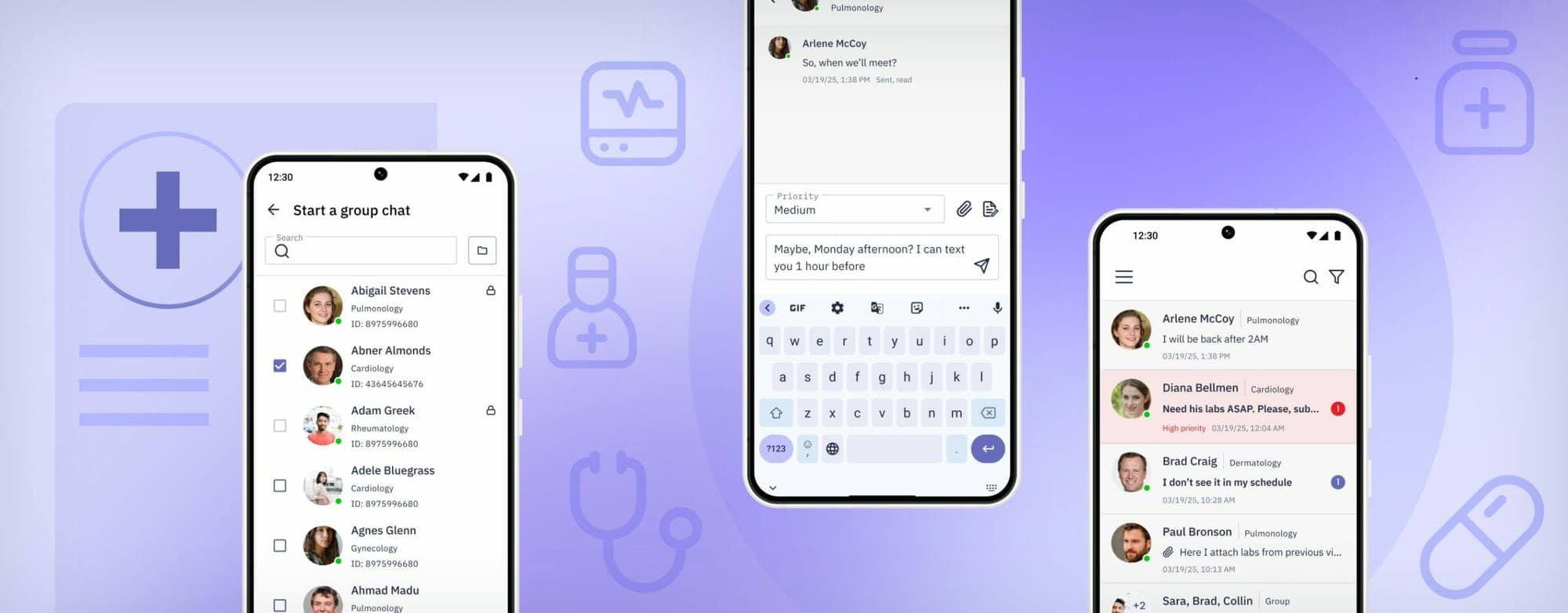
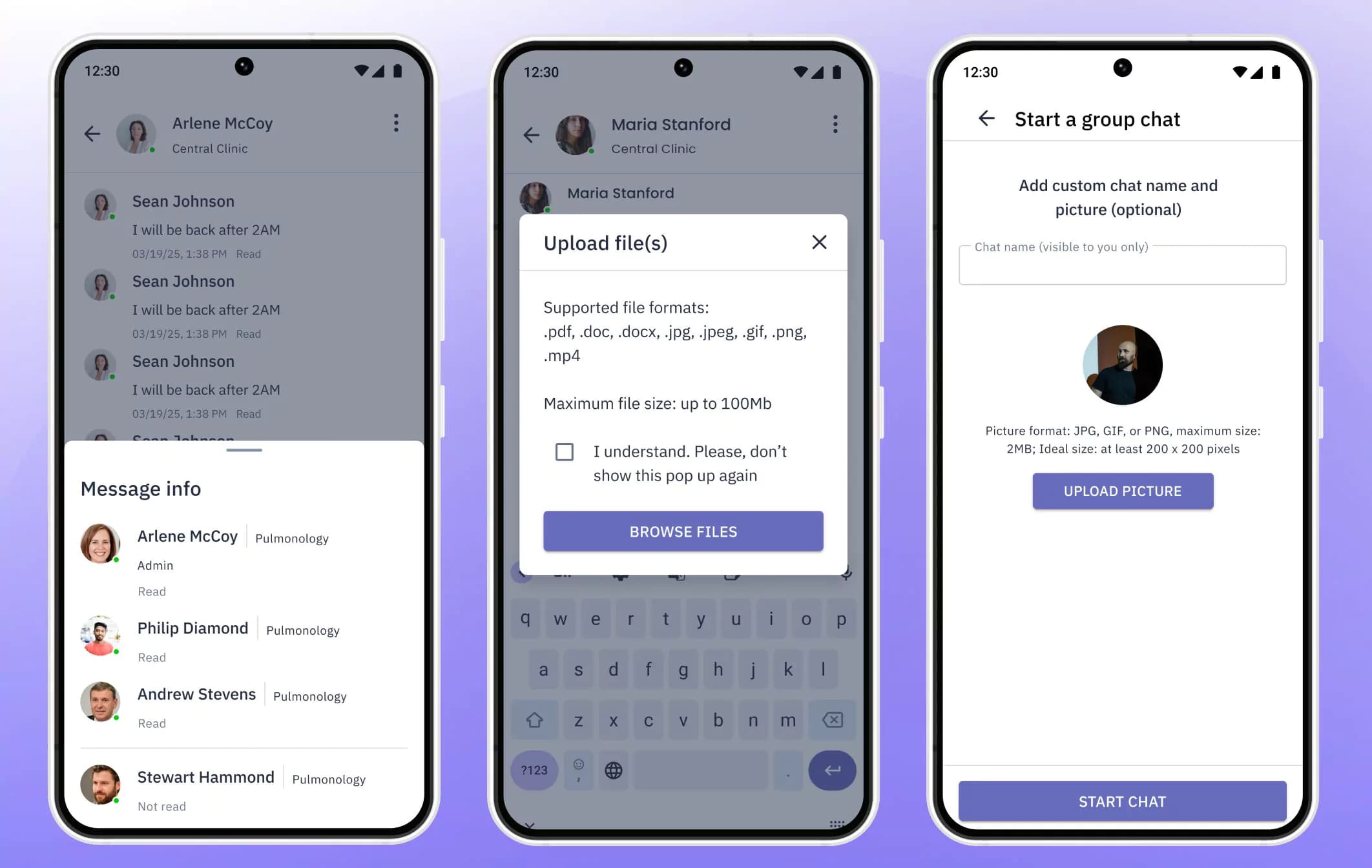
The chat application allows doctors to communicate effectively within their departments. Doctors can participate in both one-on-one and group chats, which can be organized by specific cases or departments.
Priority messaging
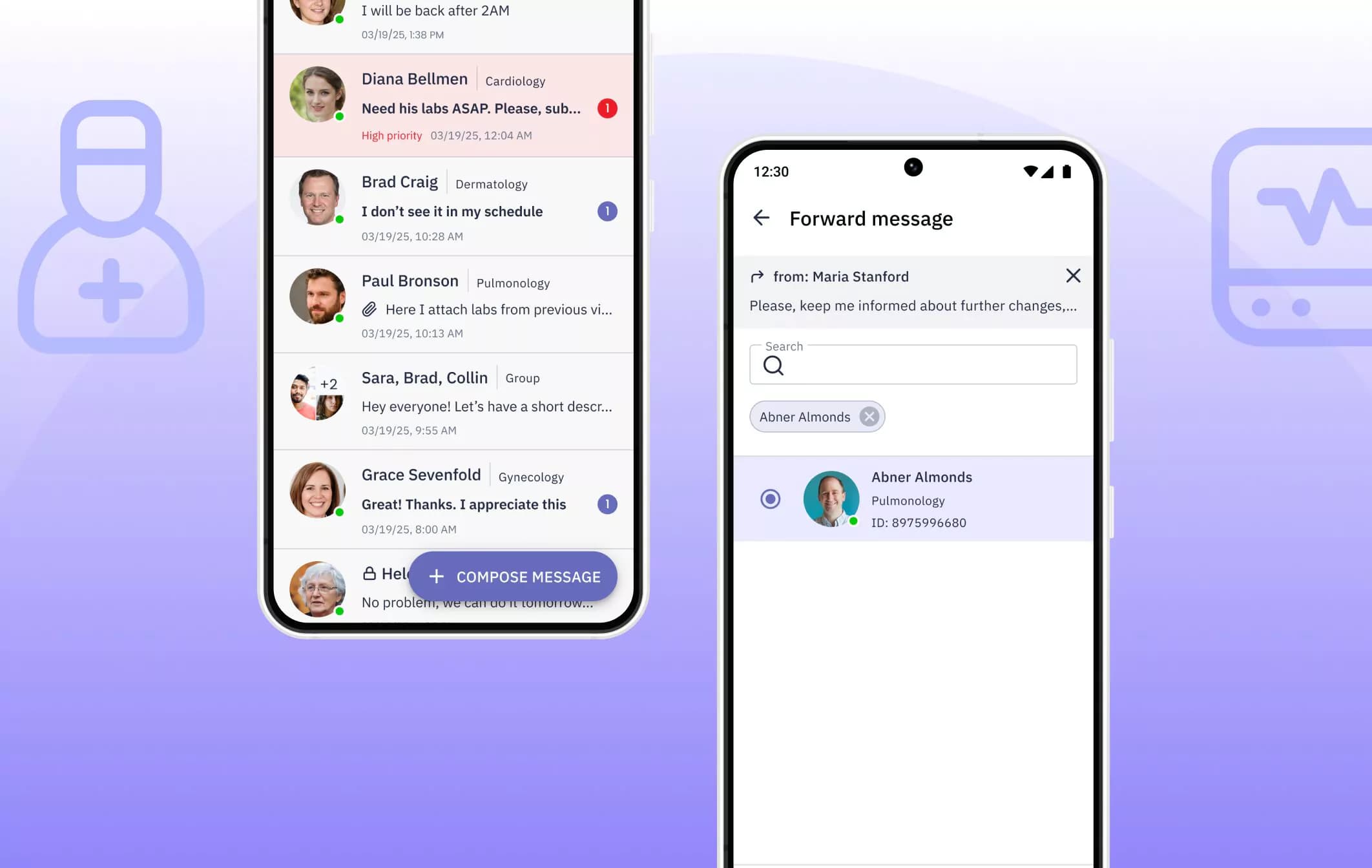
Messages can be marked with different levels of priority. High-priority messages trigger additional notifications, particularly on mobile devices, ensuring that critical information is promptly addressed.
Status customization
Doctors can set their availability status based on their schedules across different clinics. This feature allows their colleagues to see in which clinic a doctor is currently working and check doctor’s availability.
Document management
The platform supports easy and seamless exchange and handling of various document types, streamlining communication between doctors and improving patient care.
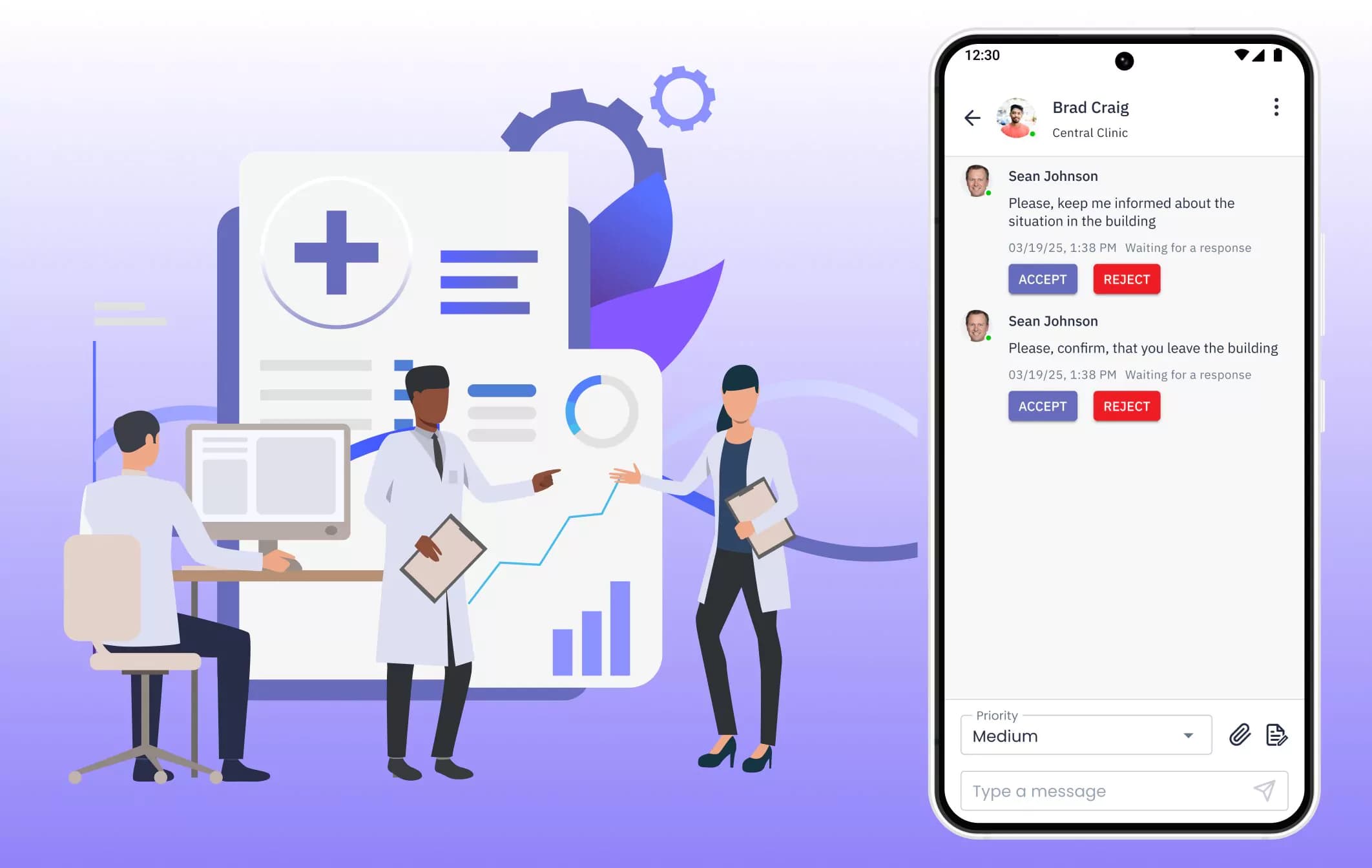
Alert mode
Certain types of messages can be sent in an “Alert Mode,” requiring a specific reaction from the recipient. This feature is extremely useful in emergency or time-sensitive situations.
Data storage and access
The chats and all documents are securely stored in a database, where clinic administrators have access and permissions to archive information for compliance and review purposes.
Alert mode
We designed this feature to handle urgent messages that require immediate attention from the recipient. “Alert Mode” ensures that in critical situations, important communications are not overlooked, thereby improving response times and patient outcomes.
When a healthcare provider sends a message in “Alert Mode,” the message is tagged as urgent. The recipient receives an instant, high-priority notification that overrides regular message alerts. The recipient can accept or reject the message.
The system tracks whether the recipient has opened the alert and prompts them to acknowledge it. This ensures the sender knows the message has been received and acted upon.
All alert mode messages and their responses are logged, providing a clear audit trail for compliance and quality control purposes.
Files attachment & management
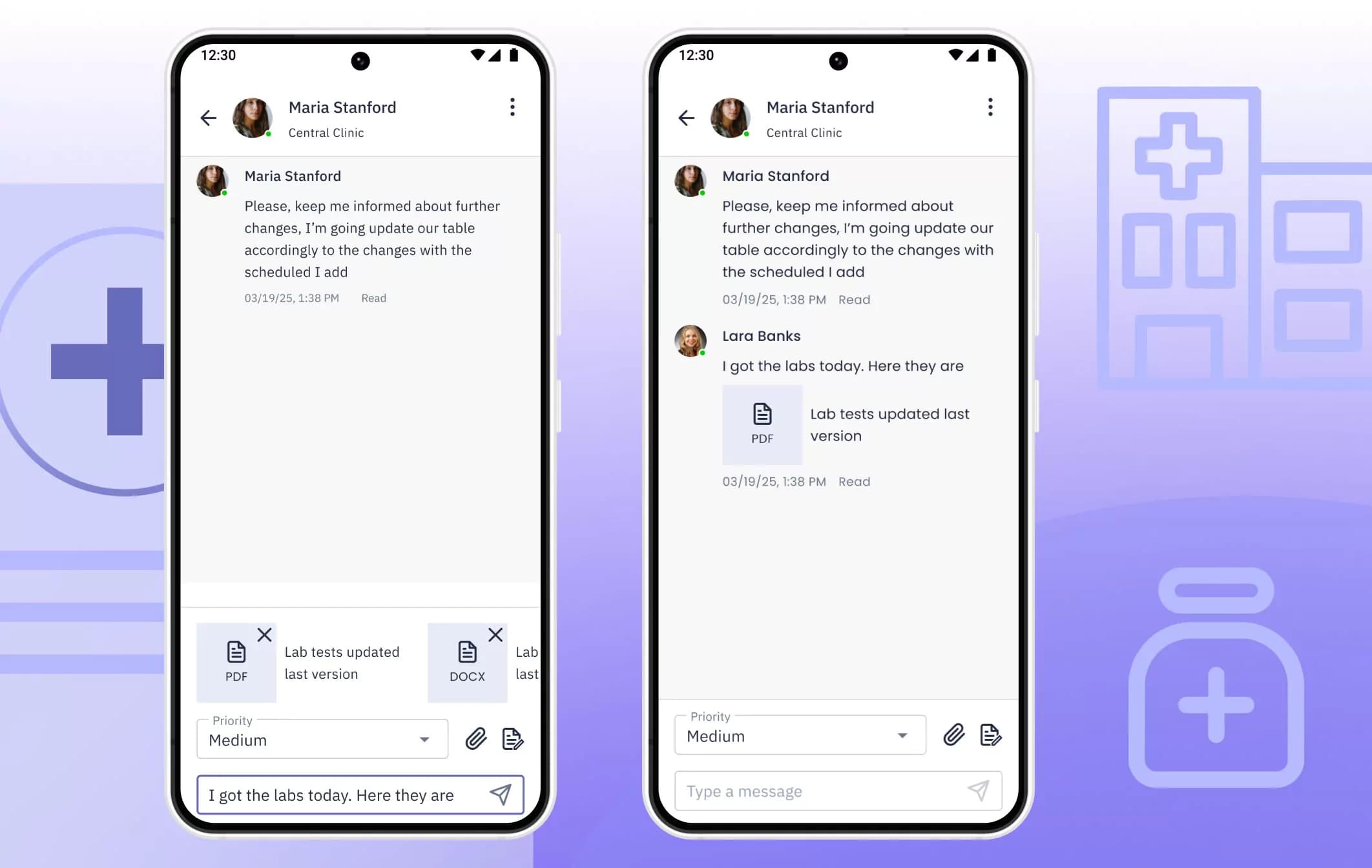
The platform supports the easy exchange and handling of various document types. This feature makes it easier for healthcare teams to collaborate, make informed decisions, and provide high-quality patient care.
Platform users can easily attach and send various document types (e.g., PDFs, images, lab results, treatment plans) within messages. They can also preview files directly within the platform and add annotations or comments, facilitating collaborative decision-making among healthcare providers.
Files attached and managed through the platform can be integrated with the Electronic Health Record (EHR) system, ensuring that all relevant documents are easily accessible in the patient’s medical history.
All files are encrypted during transmission and storage, ensuring compliance with the HIPAA and protecting sensitive patient information.
Outcome
Improved communication
After the modernization, communication delays were reduced by 40%, leading to faster response times in critical situations.
Better compliance
The redesign helped to improve compliance with healthcare regulations, ensuring secure and private communication across the clinics.
High adoption rate
Our client observed increased user adoption within hospital networks, with 95% of healthcare professionals actively using the CareLink platform.
Stable performance
CareLink became a scalable solution that supports the communication needs of large healthcare institutions, ensuring consistent and reliable performance.
Growing number of active users
After the redesign, our client observed that over 100 million messages were sent monthly through the CareLink platform. The solution became a go-to option for even more clinics across the United States.