The full case study
EHR system for a nursing facility, step by step
On this page · 8 sections
About the business
We cooperated with Harmony Health Services (HHS), a comprehensive healthcare provider located in the Midwest. This company operates 10 skilled nursing facilities, 5 assisted living centers, a home health division, and multiple outpatient rehabilitation clinics.
HHS serves over 250,000 patients annually and strives to provide patient-centered care. They serve elderly patients, patients recovering from surgeries, and people requiring long-term care.
Having so many patients in their base, it was hard for the HHS to manage all data properly and ensure continuity of the treatment. The company required a comprehensive solution able to streamline and automate certain operations. They came to our team and asked us to build a multifunctional EHR system to improve their workflow and patient care.
Project tasks and challenges
Our cooperation with Harmony Health Services began with discovering what operational challenges they are dealing with. Here is a short list of them:
- Fragmented Data Management: HHS used multiple legacy systems to manage patient data across its facilities. This fragmentation resulted in inefficiencies, data inaccuracies, and difficulty accessing patient records across different services.
- Inefficient Clinical Workflows: The lack of a unified system led to redundant data entry, delayed clinical decisions, and increased administrative burdens on the staff.
- Compliance and Reporting Issues: Ensuring compliance with regulatory standards and generating accurate reports was time-consuming and prone to errors due to decentralized data management.
- Poor Interoperability: Communication between different facilities and external healthcare providers was hindered by the absence of a robust health information exchange system, impacting the continuity of care.
Project team
- Project Manager
- Business Analyst
- 2 UX/UI designers
- 3 Front-end developers
- 3 Back-end developers
- Software Architect
- 3 QA engineers
- DevOps specialist
6 months for audit & redesign
10 months for development & testing
Platform Features
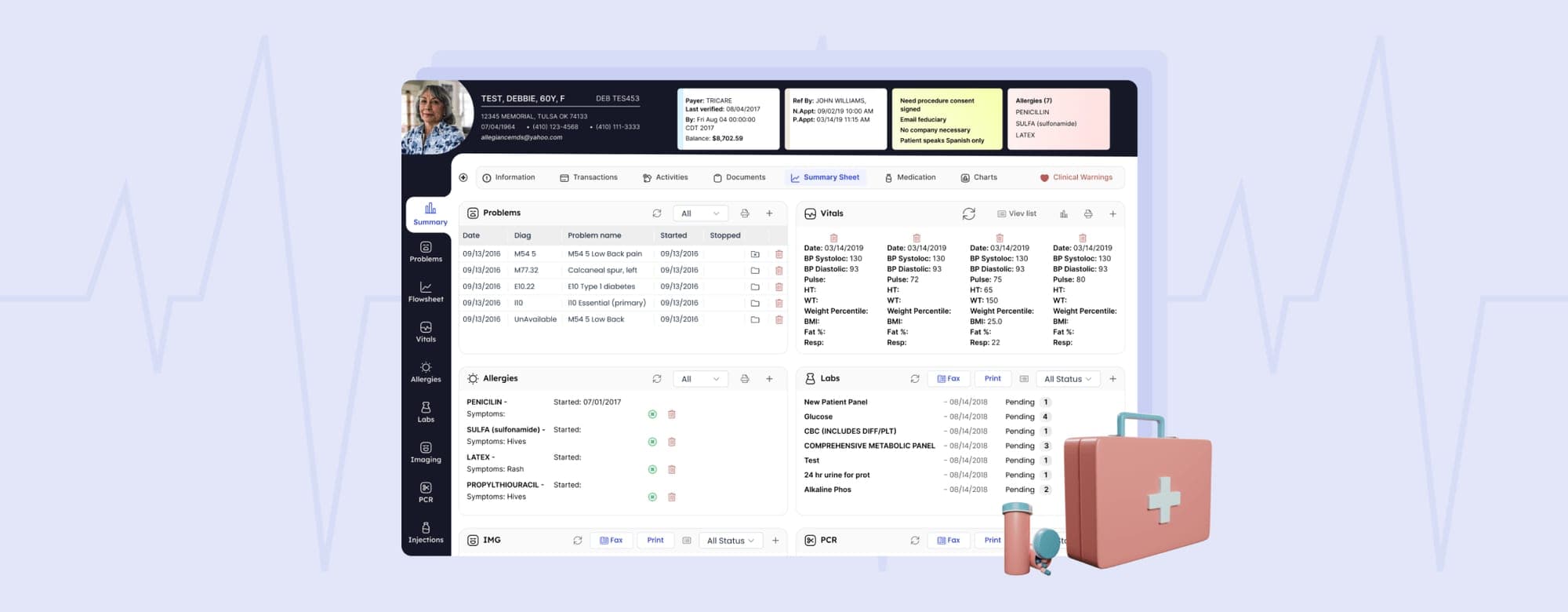
Patient Health Record
The system offers centralized patient health records accessible to authorized clinicians. They can benefit from a comprehensive view of patient history, treatments, and medical history.
Analytics & Reporting
To help clinicians monitor key performance indicators and quality metrics, we added advanced analytics tools and customizable dashboards with real-time data visualization and reporting.
Billing & Financial Management
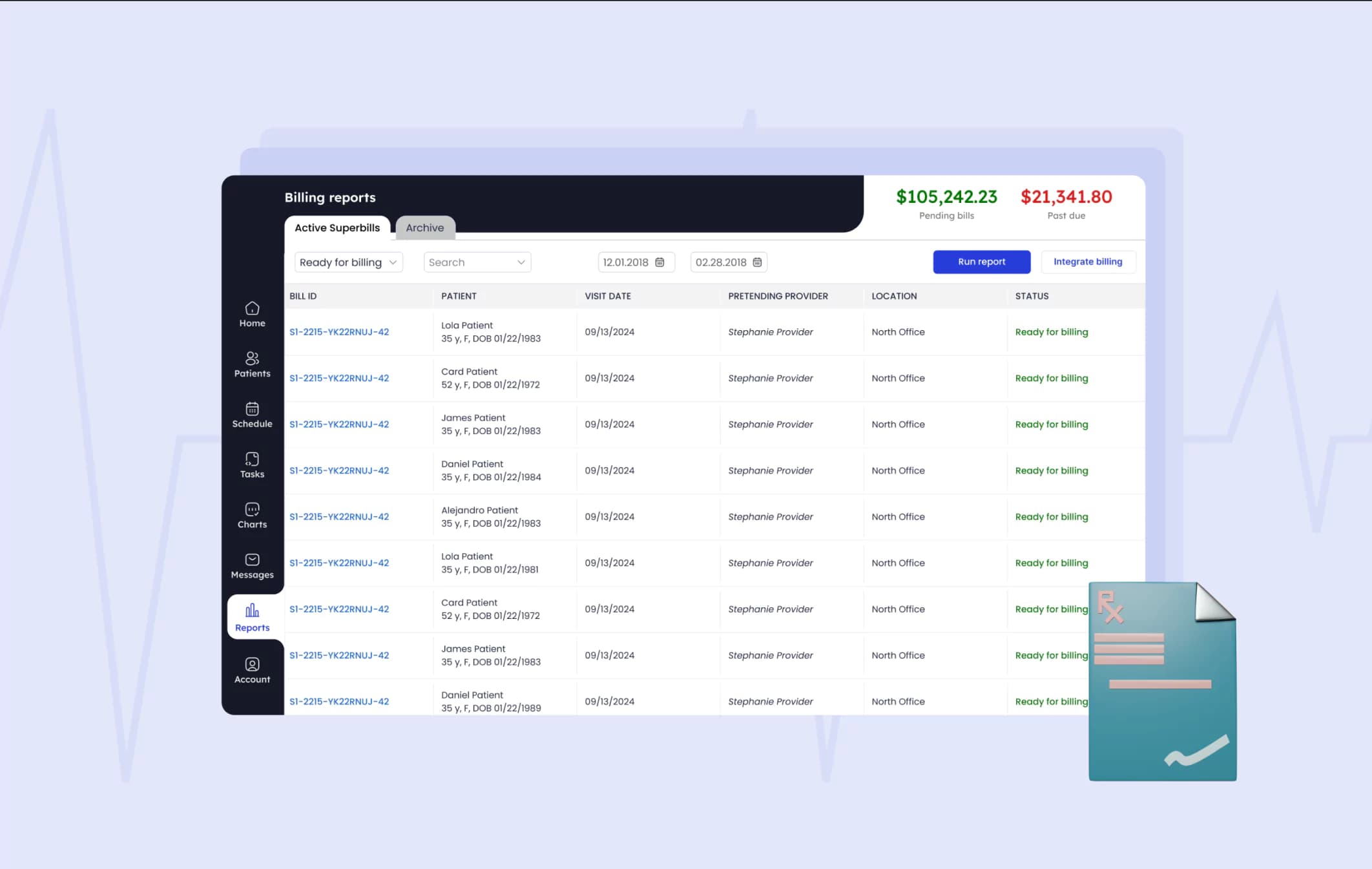
The EHR system has a billing system that automates invoicing, claims processing, and payment tracking. Plus, there are financial reporting tools that generate detailed financial and compliance reports.
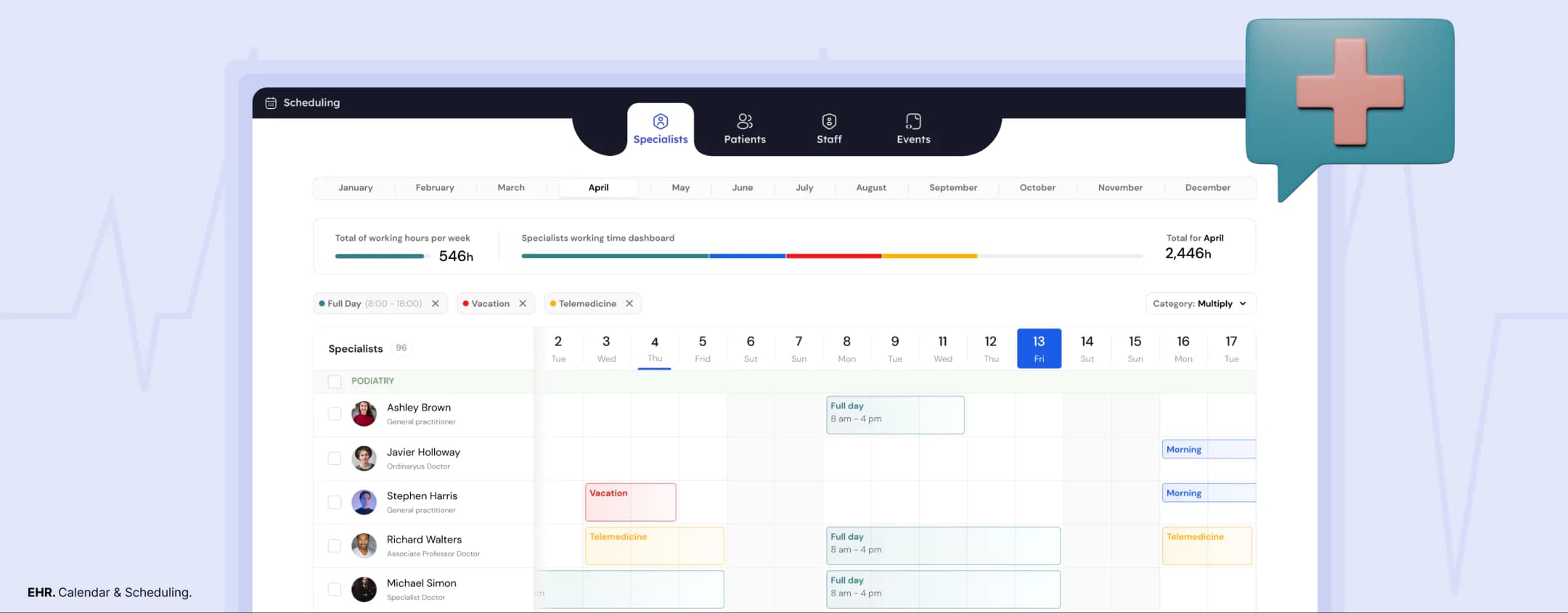
Calendar & Scheduling
Clinicians can easily schedule patient appointments, staff shifts, and facility events. There are automated reminders and notifications for all upcoming appointments and schedule changes.
Clinical Documentation
With real-time clinical documentation tools, clinicians can record patient information at the point of care and use customizable templates for different clinical notes.
Patient Registration & Scheduling
We streamlined the patient onboarding process with digital forms and automated data entry. Clinicians and patients have access to the scheduling system and can easily manage all appointments.
Health Information Exchange
The system includes interoperability features for seamless data exchange with external healthcare providers and systems. The integration with HIEs helps to ensure continuity of care.
Patient Portal
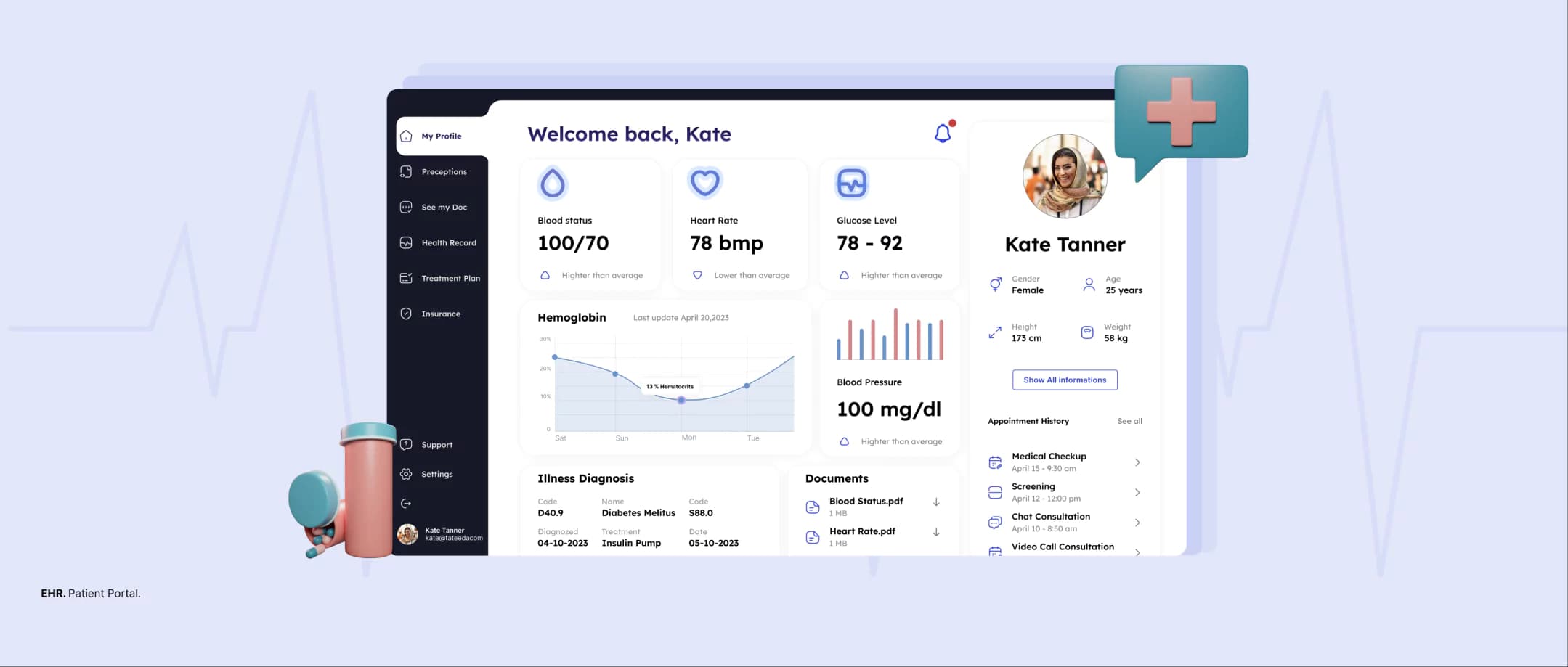
Our goal was to build a patient portal that will become a go-to option for clinicians and patients, helping both get secure access to health records, lab results, and appointment schedules.
We also needed to include convenient communication tools to enable secure messaging between patients and healthcare providers.
While working on the patient portal, we took care of its UX design and ensured every option was easy to find, access, and use.
We added a set of must-have options in the portal, including:
- Secure authentication – users can access the portal through a secure login using unique credentials, ensuring data privacy and security.
- Appointment scheduling – patients can book, reschedule, or cancel appointments with their healthcare providers directly through the portal. On top of that, they can review summaries of past visits, including the doctor’s notes, prescribed treatments, and follow-up instructions.
- Prescriptions – patients can request prescription refills and view their current and past medications.
- Lab results/reports – patients can access their lab results and diagnostic reports as soon as they are available.
- Family access – with proper authorization, patients can manage health information for their dependents or family members through a single portal account.
- Health tracking – patients can monitor their health metrics such as weight, blood pressure, and glucose levels. The portal also integrates with wearable devices and health apps.
- Messaging – this feature supports sending and receiving documents, images, or other relevant medical information.
Prescription & medication management
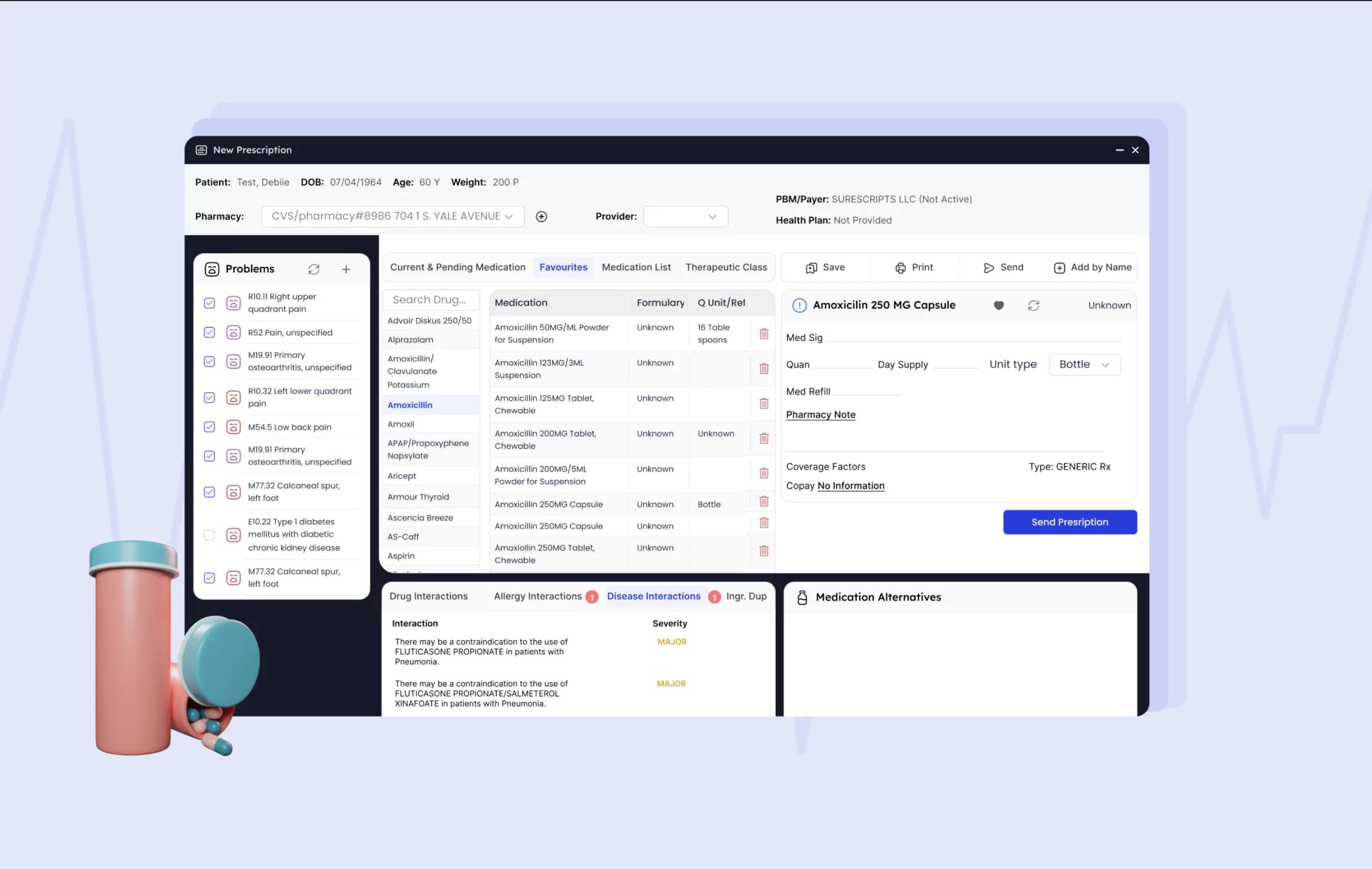
Our client wanted to integrate a feature for easy and clear prescription and medication management. This feature should:
- improve medication adherence
- streamline management of prescription requests
- foster better communication between patients, healthcare providers and pharmacies
Patients should be able to request prescription refills directly through the EHR system. The system can then notify healthcare providers, who can approve or deny patients’ requests. Once the prescription is approved, it is sent to the patient’s preferred pharmacy.
We also added a medication history option so that patients could access a comprehensive list of their current and past medications. This list includes the medication name, dosage, frequency, doctor’s prescription, and start/end dates.
Patients can access detailed medication information, including usage instructions, potential side effects, and precautions. They can also securely communicate with their healthcare providers and pharmacists regarding any questions or concerns about their medications.
Development approach
Backend Development
The system was built using .NET Framework and .NET Core for its scalability and efficiency in handling multiple concurrent connections.
Frontend Development
React.js was used to create a responsive and intuitive user interface, ensuring ease of use for medical staff.
Database Management
We selected MS SQL as a primary database and additionally MongoDB for its flexibility and scalability in managing large volumes of unstructured data.
Interoperability
FHIR (Fast Healthcare Interoperability Resources) standards were implemented to ensure seamless data exchange between healthcare systems.
Security
Advanced encryption techniques and compliance with HIPAA regulations were employed to ensure the highest levels of data security.
Cloud Services
Azure was selected by our team for its reliable and scalable cloud computing services, facilitating quite easy remote access and secure data storage.
Outcome
Improved Clinical Efficiency
EHR system helped to streamline workflow and reduce redundant data entry, helping clinicians to focus more on patient care.
Enhanced Data Accuracy
Centralized data management improved data accuracy and integrity allowing to facilitate informed clinical decisions.
Better Interoperability
EHR system enhanced communication between different facilities and external providers through HIE capabilities making continuity of care better.
Higher Revenue
Reduced administrative costs and improved billing processes helped our client to achieve higher revenue and significant ROI.