The full case study
Hub.AI, step by step
On this page · 9 sections
About the business
A major telecom company from Europe approached our team with a challenging proposal. They wanted to develop a unique SaaS platform, which would integrate three of their existing solutions into a single product.
The company already had a complicated marketing tool that enabled marketers and businesses to launch and manage campaigns. However, they were in the process of merging with two other businesses that had their own AI-powered chatbot and customer support platform.
The objective of the client was to combine all three products under one brand – Hub.AI. Our team was entrusted with the task of conducting a thorough review of the existing solutions and devising a concept for a new SaaS that would prioritize user experience and incorporate the latest features.
Project challenges
The primary challenge of this project was to align the visions and expectations of three groups of stakeholders, who were previously independent businesses with separate products: an AI chatbot, a campaign builder, and a support platform. Since they had never worked together before, they lacked the following:
- an understanding of how to integrate and sync products
- knowledge of how to create a cohesive branding
- skills to perform a holistic research and build a concept
- specialists to test the concept and analyze insights
Furthermore, they had a marketing event scheduled in the upcoming quarter where they intended to present this new solution, so we needed to move quickly. To address these challenges, we planned a series of quick but thorough interviews and workshops with their teams to discover all pain points, develop and synchronize product vision, and create new customer journey maps.
Project tasks
- Conduct a series of interviews with stakeholders and in-depth discovery to outline major challenges and bottlenecks, target audience demographics and characteristics.
- Do an audit of current solutions to assess UX, discover areas of improvement, and create new user journeys.
- Create and test new concepts of a SaaS platform to select the most user-centric and effective one and choose further design and development approach.
Project team
- Project Manager
- Solution Architect
- 3 UX/UI designers
- 2 Business Analysts
Audit approach and flow
Our main goal was to help stakeholders from different products form a clear vision of the future multifunctional SaaS platform and then turn that vision into reality. So, we started with interviews and audits to discuss:
- their primary challenges
- their vision and expectations
- current processes and tech aspects.
Our team also researched the target audience in-depth to understand their challenges and how a SaaS platform can address them. We created new user personas and focused on both groups of users – current and potential ones.
All this information helped us to comprehend how to connect and integrate three products while ensuring a seamless user experience. We used these insights to create and test two design concepts with real users to test the hypotheses and receive feedback.
10 interviews with stakeholders
14 hours of online workshops
3 brand new customer journey maps
2 design concepts created
Concept creation
Our team audited three solutions – AI chatbot, Campaign builder, and Support platform. Once we identified the ideal target customer and their challenges, we started working on a new SaaS concept. We aimed to demonstrate how these three standalone solutions can work together with a single user interface to enhance customer journey and experience. We developed two concepts:
We developed two concepts:
1. Sequential – with more familiar user flow. 2. Dynamic – with brand new navigation and user flow.
We tested both campaigns with real users and let all stakeholders vote for the concept they considered the best user experience. The dynamic concept won. Let’s take a deeper look at why.
Sequential concept
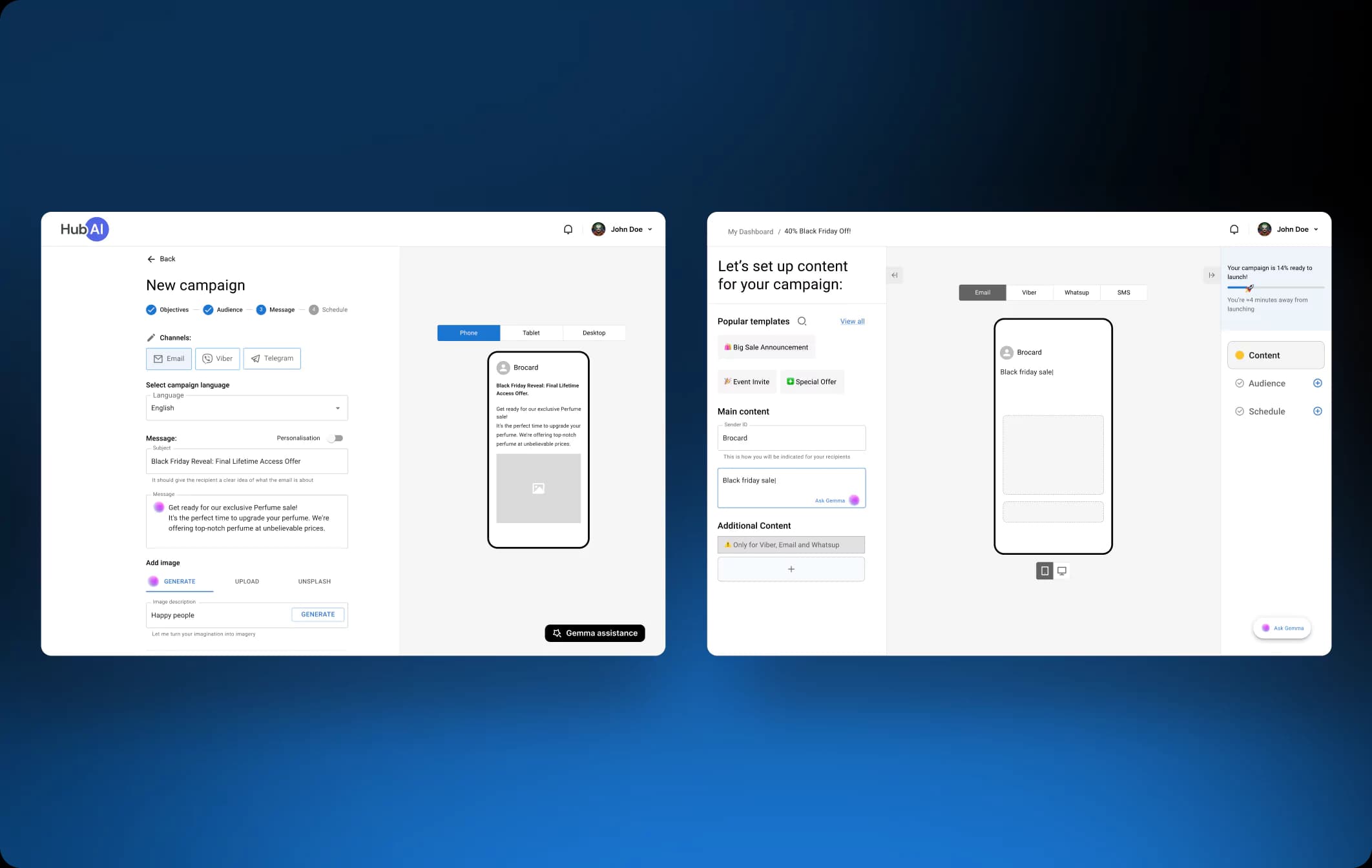
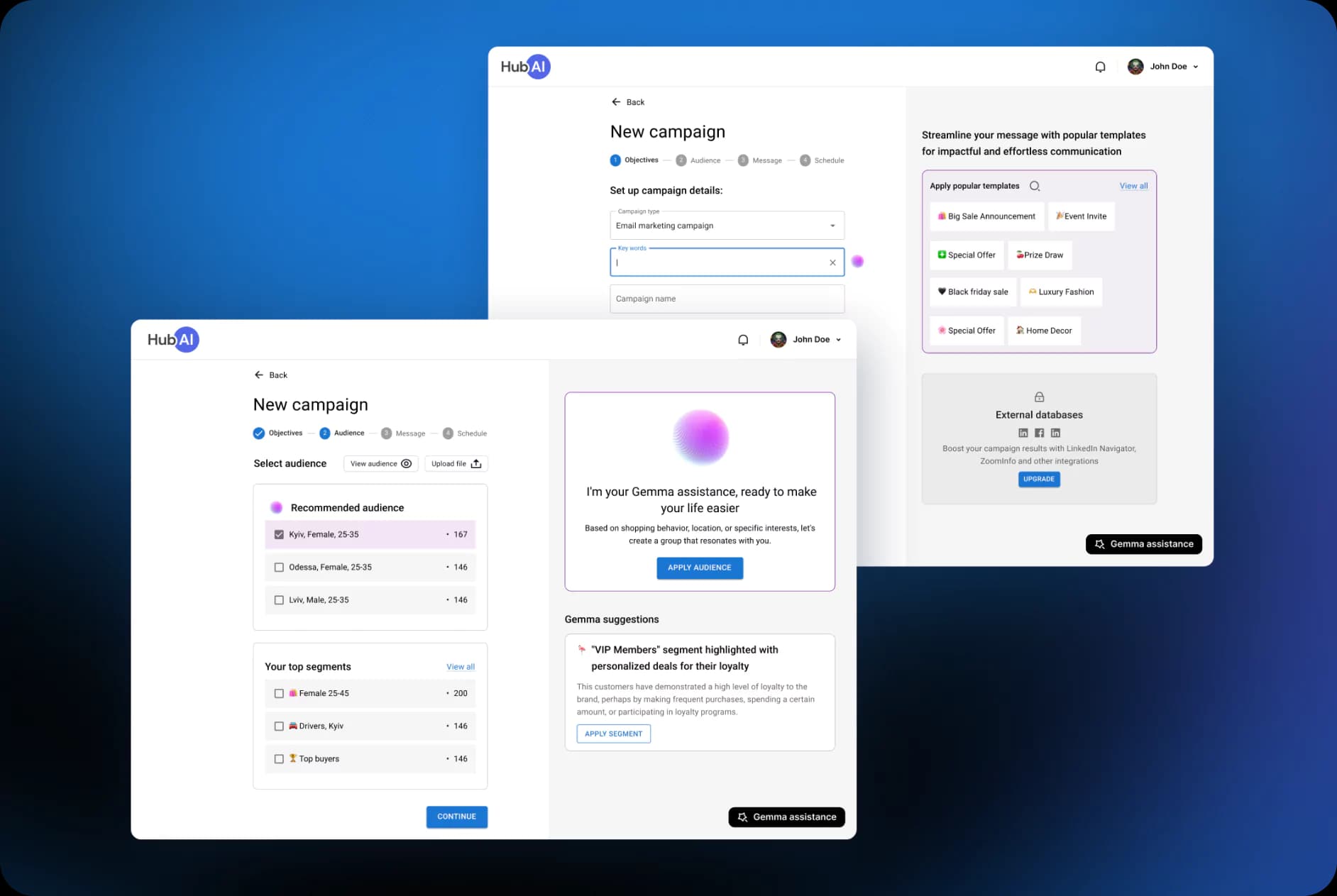
The idea behind this concept was to unite campaign builder and AI chatbot without too drastic changes of habitual user flows (i.e. creation of campaigns, scheduling, previewing campaign before launch, etc). We knew that users do not like to relearn. So when you redesign a solution to match a new branding, you should keep in mind and use some common patterns.
Our goal was to show how to enhance the platform with AI chatbot and automate campaign creation. We improved onboarding, added progress wizard and pop-ups with tips helping to navigate the process and use AI to the fullest.
However, when we started testing the concept with the real users it turned out that they found it hard to find some options and navigate through different campaign criteria. Even with the tips and improved onboarding the new feature-rich product lacked clarity.
Dynamic concept
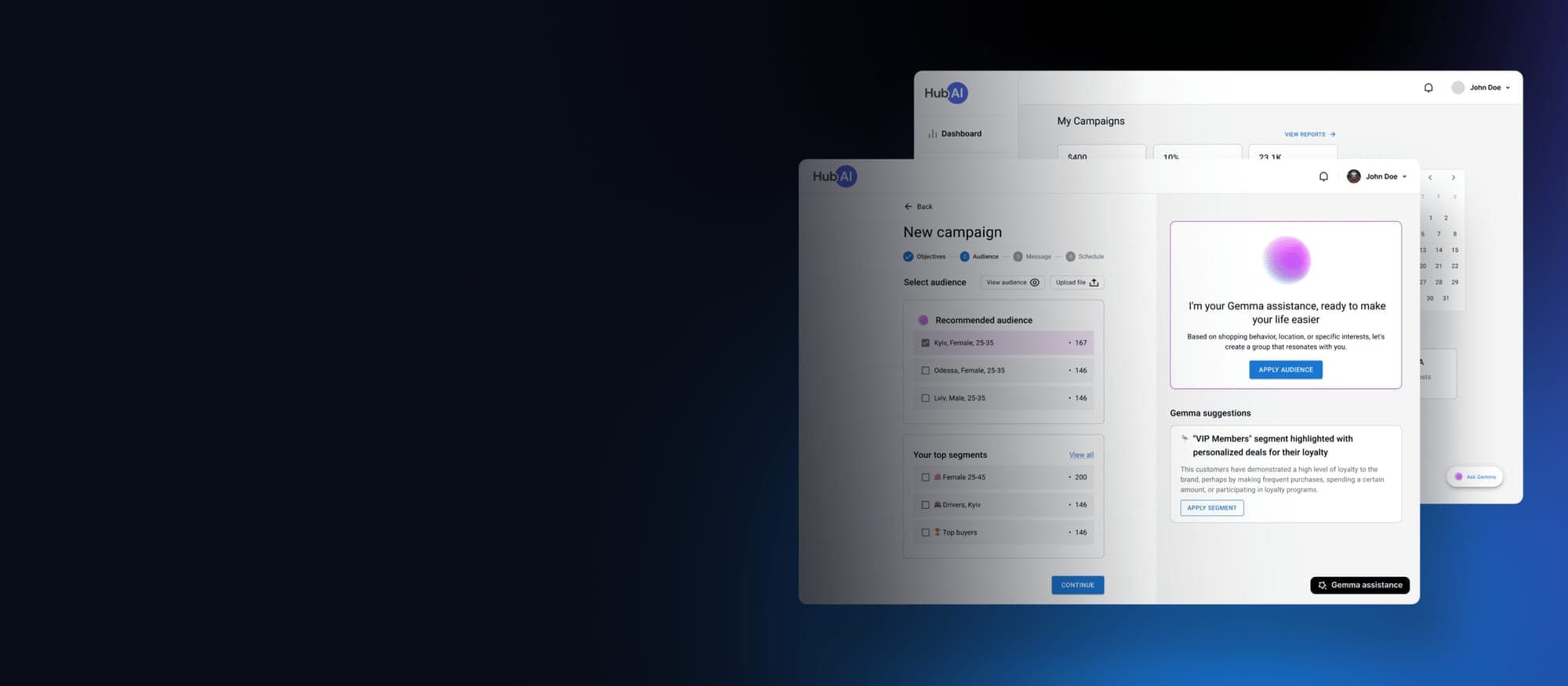
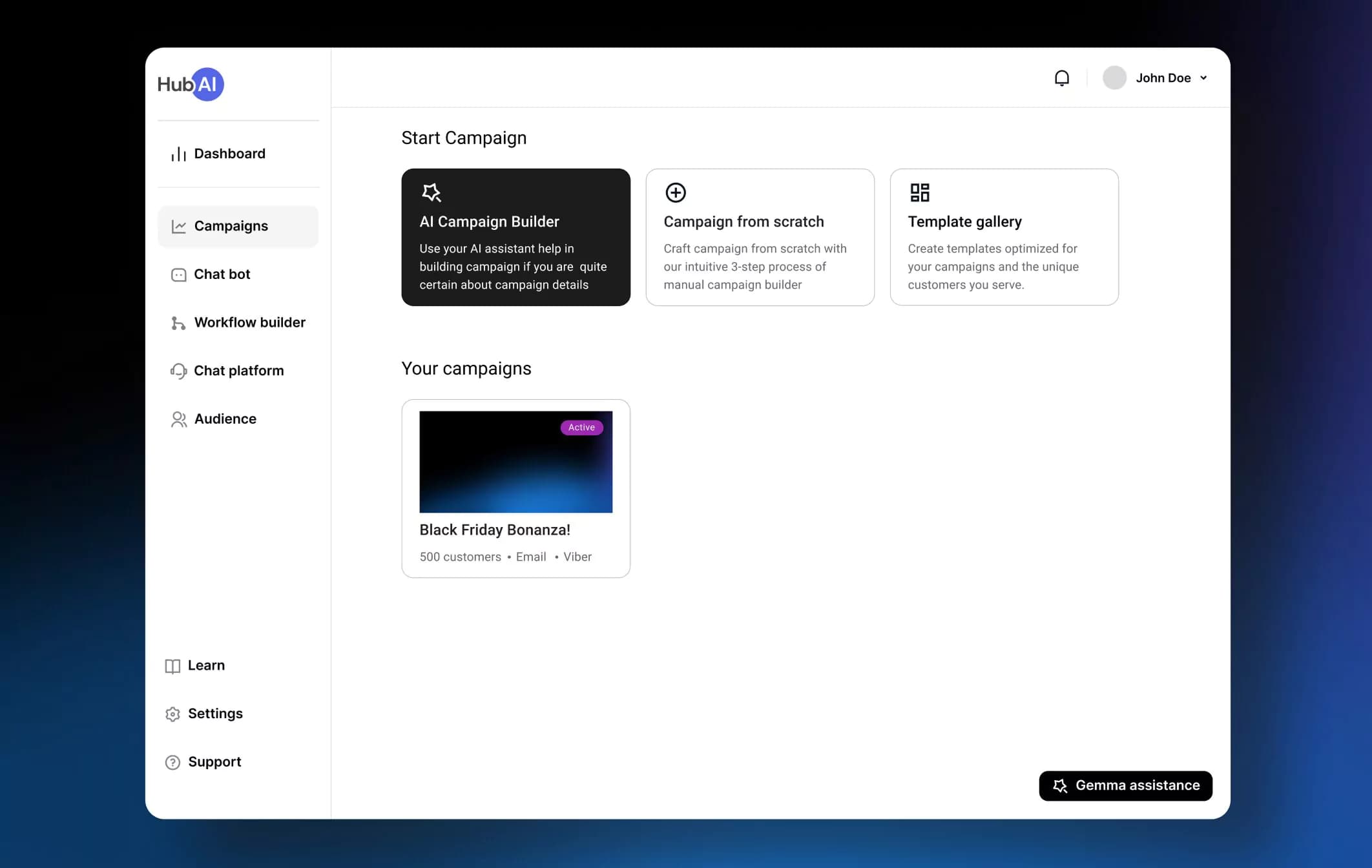
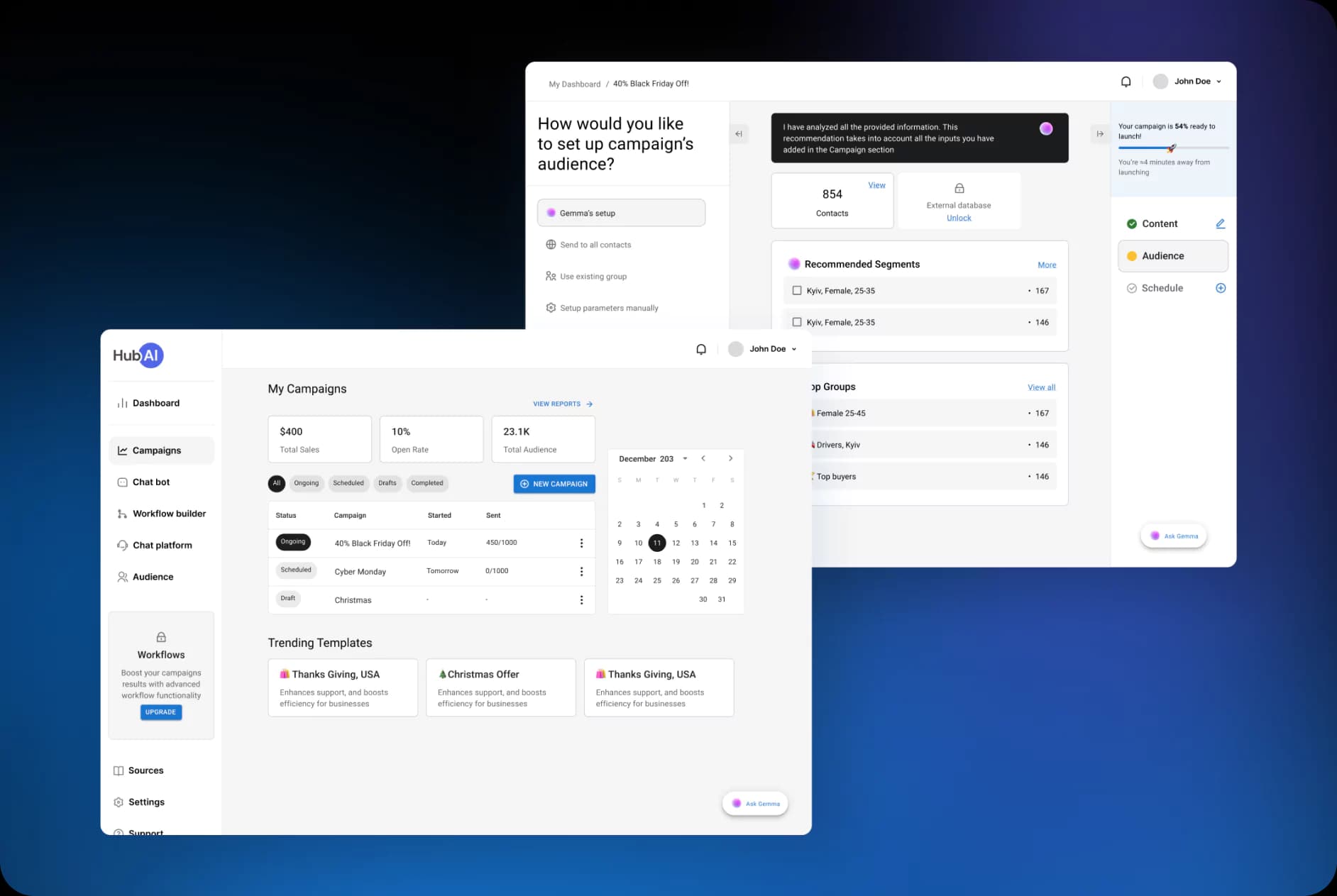
Dynamic concept implied significant changes of user flows and product interfaces. We wanted to present a brand new design of Hub.AI that would highlight all the benefits of AI chatbot and push campaign creation to a whole new level.
Here is what we added to achieve our goal:
- step-by-step navigation and progress bar
- screen emulator to see how a campaign will look on different platforms
- set of campaign templates that can be used in one click
We also redefined how AI chatbot should work. We wanted it to do more that just providing different tips. It should be able to facilitate and support user actions on the go. AI should become a smart assistant that guides users through the whole process of campaign building.
This product concept was also tested with real users and we received rather positive feedback. Although it took some time to comprehend how the tool and AI assistant work, users enjoyed the new flow.
As to the stakeholders, they took some time to compare both concepts created by our team. They also voted and discussed what approach would better reflect their new brand identity and make SaaS platform a go-to solution for users. After all negotiations, they decided to go for a dynamic concept.
Next Steps
We assisted our client in defining the vision and requirements for developing a new platform that integrates several of their recently acquired solutions. We supported their decision with feedback from real users by creating multiple platform concepts. As a result, our client obtained valuable insights and a high-end product development plan, along with an estimate of the subsequent development phases.
All stakeholders were content with the vision that we helped shape and decided to initiate the next development phase based on our dynamic concept that effectively combined the capabilities of all three standalone products with improved user flows, usability, and functionality.